2026 Best Integral Drill Rod Options for Global Buyers?
The global demand for Integral Drill Rods is rapidly increasing, as industries seek reliable drilling solutions. Renowned expert Dr. James Harper states, "The quality of Integral Drill Rods can significantly impact drilling efficiency." This highlights the importance of selecting the best options available.
Integral Drill Rods are essential for various applications, from construction to mining. Their design influences performance and durability. As technology advances, global buyers face myriad choices in the marketplace. Understanding the features and benefits of different rods is crucial for making informed decisions.
Despite the advancements, some buyers may struggle to find the optimal choice. The plethora of options can be overwhelming. It's vital to evaluate factors such as material quality and manufacturer reputation. This deep dive into the best Integral Drill Rod options will guide buyers through the complex landscape. It aims to illuminate the path to successful drilling operations.

Overview of Integral Drill Rods and Their Applications
Integral drill rods are crucial in various drilling applications. Their design allows for increased durability and efficiency. These rods provide enhanced strength, making them ideal for hard rock drilling tasks. They are commonly used in mining, geological exploration, and construction projects. Their solid structure minimizes the risk of breakage compared to traditional rod types.
When selecting integral drill rods, consider the materials used. High-quality steel tends to offer better performance. Additionally, pay attention to the rod's diameter and length, as these factors greatly affect drilling speed and efficiency. Different applications may require distinct specifications. Understanding your project's needs is vital.
Tips: Regularly inspect your drill rods for wear and damage. This upkeep ensures optimal performance and longevity. Also, think carefully about your drilling environment. Conditions like soil type and moisture levels impact your choices. Be open to adjusting your equipment, even if it means changing your routine.
Key Features to Consider When Selecting Integral Drill Rods
When selecting integral drill rods, several key features come into play. One crucial aspect is the material quality. High-quality steel provides strength and durability, essential for rigorous drilling operations. The rod's diameter impacts its performance too. Larger diameters generally enhance stability but may be less flexible in tight spaces. This balance between strength and maneuverability should be carefully evaluated.
Another important feature is the rod's threading type. Different thread designs can influence connection strength. Some threads allow for quicker assembly and disassembly, which can save time on-site. It's also vital to consider the weight of the drill rod. Lightweight options can reduce operator fatigue, but they must not compromise on sturdiness. Each project might require a different approach.
Users often overlook the compatibility of rods with existing equipment. Ensuring that new rods fit your current tools can prevent delays. Testing a few samples before making a bulk purchase is a prudent strategy. Be wary of assuming that all rods will meet your project’s demands. Real-world testing often reveals unforeseen challenges with performance and durability.
Top Manufacturers of Integral Drill Rods for Global Markets
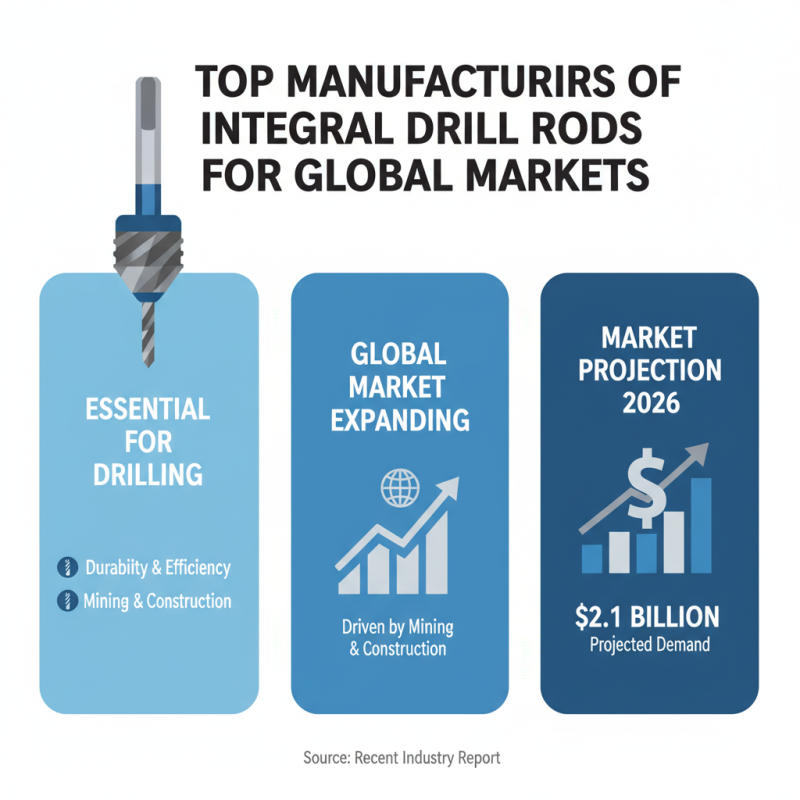
Integral drill rods are essential in the drilling industry. They provide durability and efficiency in various applications. The global market for these rods is expanding, driven by the mining and construction sectors. According to a recent industry report, the demand for integral drill rods is projected to reach $2.1 billion by 2026.
The top manufacturers in this sector focus on innovation and quality. They offer rods that enhance performance and reduce wear. Reports indicate that companies utilizing advanced manufacturing techniques have improved the lifespan of their products by 30%. This is vital for reducing downtime and increasing productivity in drilling operations. However, challenges remain. Some manufacturers struggle with quality control, impacting the reliability of their rods.
Investing in technology is crucial for these manufacturers. It allows them to meet the rising standards of safety and efficiency. Additionally, the geographic distribution of production facilities impacts logistics and cost efficiency. Many companies are now exploring sustainable practices. This shift is needed to address environmental concerns. The future of integral drill rods depends on adapting to these evolving market demands while maintaining product integrity.
Comparative Analysis of Integral Drill Rod Options Available in 2026
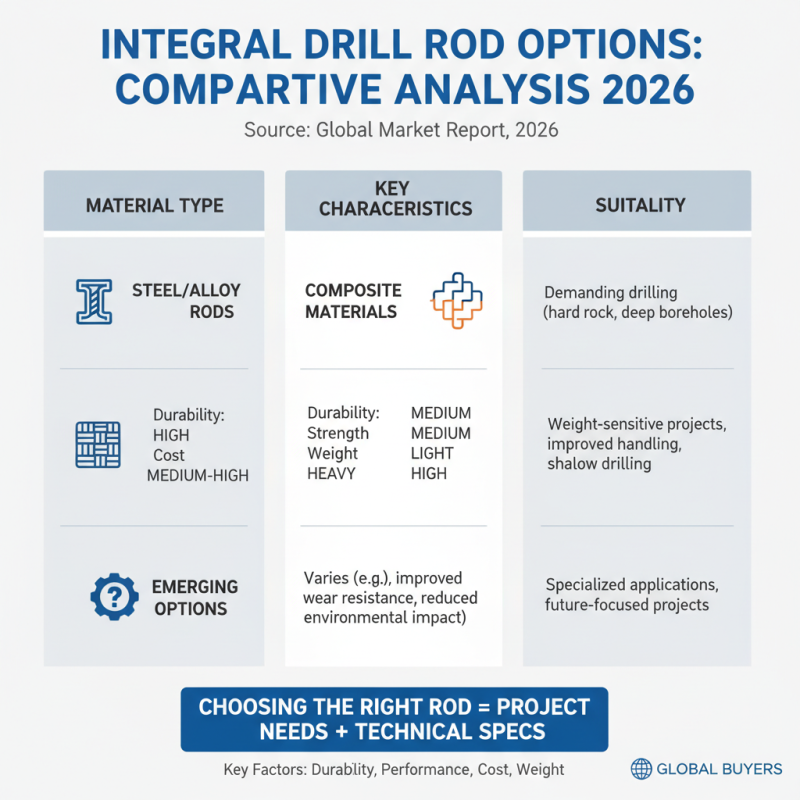
As the integral drill rod market evolves, 2026 presents several options for global buyers. Understanding the technical specifications is crucial. Different materials offer varying levels of durability, performance, and cost. Steel and alloy rods are popular for their strength, while composite materials provide lighter weights. Buyers must weigh these factors against their specific project needs.
Comparative analysis of these integral drill rod options reveals important insights. Performance metrics vary widely based on the application. For instance, rods designed for deep drilling may require enhanced tensile strength. Meanwhile, shorter rods often prioritize flexibility. Data from various testing environments highlights the reliability and potential weaknesses of each type.
Choosing the right drill rod also involves considering local supplier capabilities. Not all manufacturers maintain the same standards of quality control. It is vital to assess the sourcing practices and production methods of potential suppliers. Some options might seem ideal but may have hidden weaknesses. This careful consideration can save time and reduce costs in the long run.
Best Practices for Maintaining and Extending the Life of Drill Rods
Drill rods are essential in various drilling operations. Maintaining them properly can significantly extend their lifespan. Regular inspections are crucial. Look for signs of wear, corrosion, or bending. These issues can lead to more significant problems if neglected.
One must also be aware of the environmental factors affecting drill rods. Working in damp or corrosive environments speeds up degradation. Using protective coatings or storing rods in a dry location can mitigate these effects.
Tips:
- Always clean rods after use to prevent debris buildup.
- Keep rods well-lubricated to reduce friction and wear.
- Train operators on best handling practices to avoid accidental damage.
Addressing these maintenance practices can ensure that your drill rods perform reliably over time. Reflection on past experiences can help in improving current protocols. Adapt and evolve strategies based on practical findings.