
Choosing the right Hydraulic Drill Rig can significantly impact your project's success. With various types and models available, it can be challenging to make a choice. The right rig should match the project’s specific needs and conditions.
Consider the scale of your project. A small site may only require a compact drill rig. In contrast, larger sites often need heavy-duty equipment. Additionally, assess the soil type and depth. Certain rigs perform better in rocky or dense materials.
Reflect on your budget as well. While high-end rigs offer advanced features, they might not always be necessary. It's crucial to balance cost with performance. Understanding these facets will guide you in selecting the most suitable Hydraulic Drill Rig for your needs.
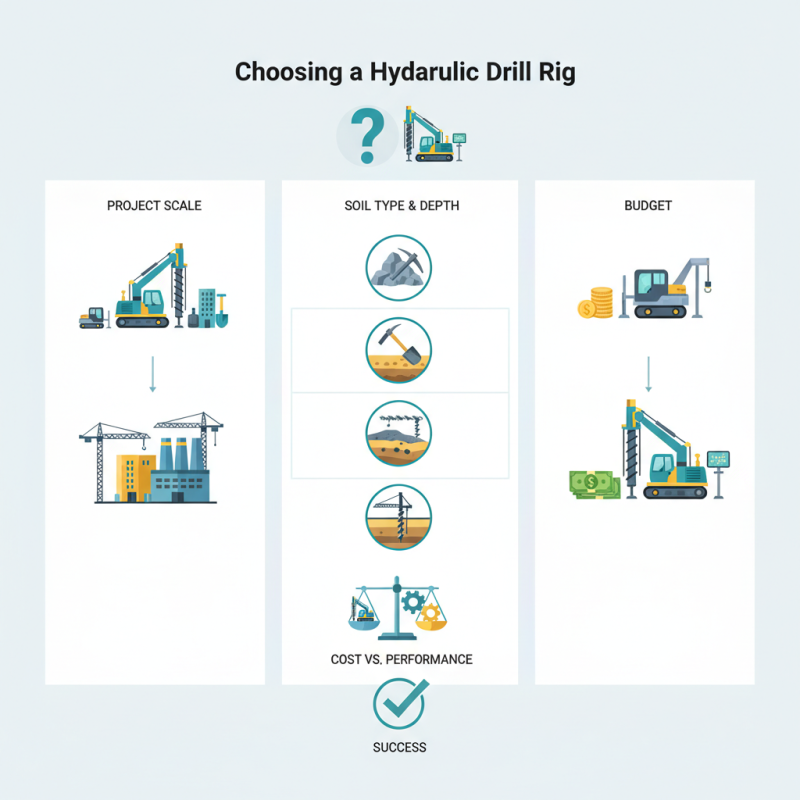
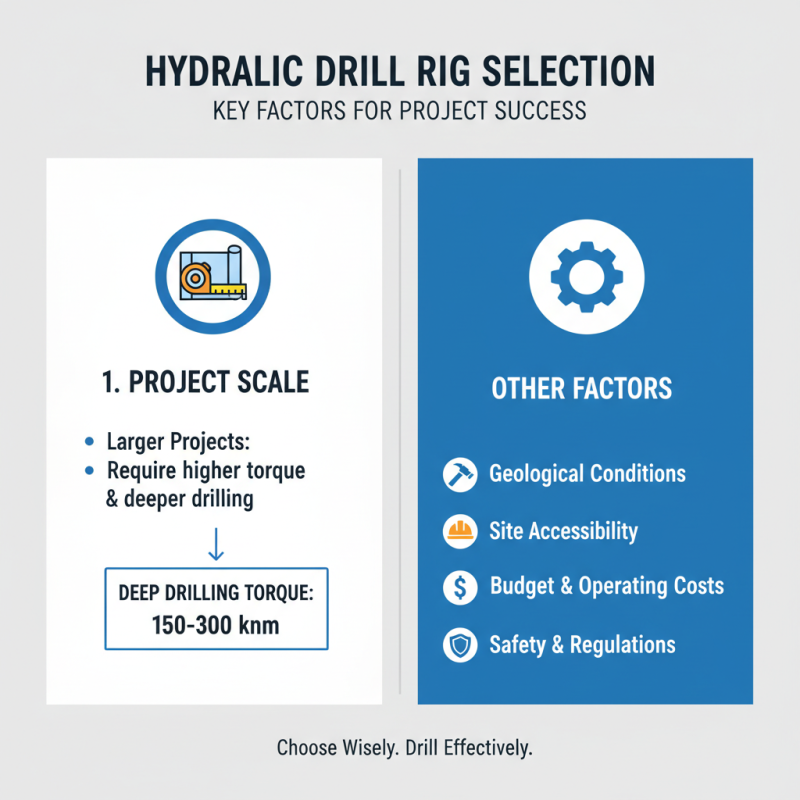
Choosing the right hydraulic drill rig is crucial for project success. Various factors impact this decision. Project scale is the first consideration. Larger projects may require rigs with higher torque and deeper drilling capacity. Reports indicate that rigs should have at least 150-300 kNm of torque for deep drilling applications.
Another factor is soil type. Different soil compositions demand specific drill rigs. For instance, rocky terrains might benefit from heavy-duty models. Meanwhile, soft soils may not need such robust machines. The Geological Society states that understanding soil types can enhance efficiency.
On top of that, budget constraints pose a challenge. Many project managers struggle to balance cost with quality. Investing in a high-quality rig may save money in the long run through fewer breakdowns. However, a lower-cost rig might lead to unexpected expenses due to inefficiency. Lastly, consider operator skill level. Users must understand the machine's capabilities. Improper usage can lead to setbacks and higher operational costs. Each factor plays a significant role in the selection process.
When choosing a hydraulic drill rig, it’s essential to understand the different types available. Each rig serves unique functions. There are portable models, which are lightweight and easy to transport. These are ideal for smaller jobs or remote locations. Larger, stationary rigs offer more power and capability. They excel in heavy-duty projects and demanding environments.
In addition to size, consider the rig's purpose. Some rigs specialize in geothermal drilling. These capture heat from beneath the earth's surface. Others are designed for water well drilling, creating access to groundwater. For construction sites, a more robust rig may be necessary to penetrate tough soil layers. Each application requires specific features and specifications.
It’s critical to assess your project's requirements. A mismatch may lead to inefficiencies. Sometimes, the right rig may not be readily available. Rentals could solve this, but unexpected issues can arise. Maintenance might be overlooked, affecting performance. Understanding these elements helps in making a better decision for your drilling needs.
| Type of Hydraulic Drill Rig | Typical Applications | Drilling Depth (meters) | Weight (tons) | Advantages |
|---|---|---|---|---|
| Rotary Drill Rig | Oil & gas exploration, mining | 0-1500 | 30 | High drilling efficiency, suitable for deep holes |
| Percussion Drill Rig | Geothermal drilling, site investigation | 0-500 | 20 | Effective in hard rock, less environmental impact |
| Continuous Flight Auger Rig | Foundation drilling, environmental monitoring | 0-30 | 15 | Good for shallow holes, minimal disturbance |
| Dual Rotary Drill Rig | Large-scale construction, environmental remediation | 0-1000 | 40 | Versatile, better control of drilling mud |
| Hydraulic Top Drive Drill Rig | Mineral exploration, oil drilling | 0-2000 | 35 | Higher torque, improved safety, and efficiency |
When choosing a hydraulic drill rig, key specifications are crucial. Consider the drilling depth and diameter. The rig’s power and torque directly affect performance. A rig that lacks sufficient power may struggle with tough materials. Check the maximum pressure rating. This tells you how effectively it can perform under stress.
Tip: Always verify if the rig suits your specific project needs. It’s easy to overlook this detail, but it can save time and resources.
Evaluate the weight and mobility of the rig too. A heavy rig might hinder transport, especially in tight areas. Assess the control options available. Hydraulic systems often offer better precision. However, they can be complex. Ease of operation can vary greatly.
Tip: Look for user feedback on control interfaces. Sometimes, a seemingly perfect rig may have usability issues.
Lastly, consider maintenance requirements. Some rigs demand regular checks. If maintenance appears cumbersome, it may lead to downtime. Reflect on the total cost of ownership over time. A cheaper initial investment does not always mean value in the long run.
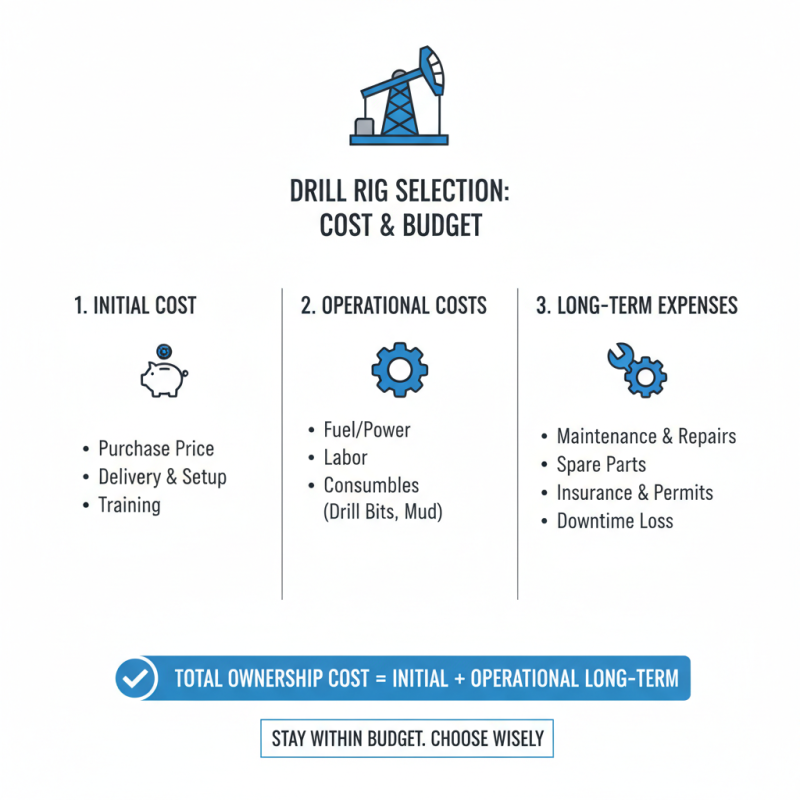
When selecting a hydraulic drill rig, budget constraints are crucial. Every project has a financial limit that shapes choices. The initial cost of the rig can vary significantly. Understanding all potential expenses helps prevent overspending. Don’t overlook maintenance costs and operational fees, which add up over time.
Evaluating cost-effectiveness requires a detailed assessment. Compare rental options versus purchasing a rig. A rental might be more financially viable for short-term projects. Conversely, if the project spans years, owning a rig could be cheaper in the long run. Analyze the workload and rig utilization carefully.
Reflect on the long-term benefits versus initial expenditures. Sometimes, a more expensive rig offers superior efficiency, saving money on labor and downtime. Performance is vital. Make sure you select a rig that suits the specific project’s needs, even if it stretches your budget slightly. It might lead to better overall outcomes. Remember to factor in unforeseen costs, as they can derail even the best-planned budgets.
Selecting the right hydraulic drill rig requires careful consideration of safety standards and environmental regulations. These factors are crucial in minimizing risks and protecting the ecosystem. Regulations vary significantly across regions. It is essential to understand local laws. Compliance helps prevent legal issues down the line.
When evaluating hydraulic drill rigs, check for compliance with safety standards. Look for features like emergency shut-off systems and proper ventilation. Operators should receive training to handle equipment safely. Failing to prioritize safety can lead to accidents and costly penalties. Maintenance is another key point. Regular inspections ensure that all safety measures function correctly.
Environmental impacts must also be a priority. Consider noise levels and potential soil contamination. Using eco-friendly fluids can minimize harm to local wildlife. Sometimes, drills are used in sensitive areas, requiring extra caution. It's vital to research the environmental laws specific to your project location. Understanding these regulations may influence your choice of equipment. Not addressing these factors could lead to significant project delays or fines.