How to Choose the Best Hand Held Rock Drill for Your Needs
Choosing the right Hand Held Rock Drill requires careful thought. This tool is essential for construction and mining tasks. Various options are available, each designed for specific needs.
Understanding your project is key. Are you drilling in tough rock or softer materials? The drill's power and weight matter. A lighter model may be easier to handle but less effective on hard surfaces. Look for features that match your needs.
Think about ergonomics and durability. A comfortable grip reduces fatigue during long hours. Some drills are heavy-duty but cumbersome. Take the time to explore different brands. This can help you find the perfect Hand Held Rock Drill. Remember, your choice impacts efficiency and safety at work.
Understanding Your Project Requirements for a Hand Held Rock Drill
Choosing the right hand-held rock drill begins with understanding your project requirements. Consider the type of rock you will be drilling. Harder rock formations need more powerful tools. For softer materials, lighter drills may suffice.
Next, assess the intended use. Are you drilling for small renovations or large construction projects? A compact drill works well for tight spaces. Larger tasks might need more robust equipment. Think about portability too. The weight of the drill affects your mobility on the job site.
Don’t forget power source considerations. Electric drills are quieter but can limit movement. Gas-powered drills offer more freedom but come with noise and emissions. Take a moment to reflect on your skill level. A beginner may struggle with advanced features. Ultimately, it’s crucial to align your choice with the specific demands of your project for safety and efficiency.
Choosing the Best Hand Held Rock Drill for Different Applications
Evaluating Different Types of Hand Held Rock Drills Available in the Market
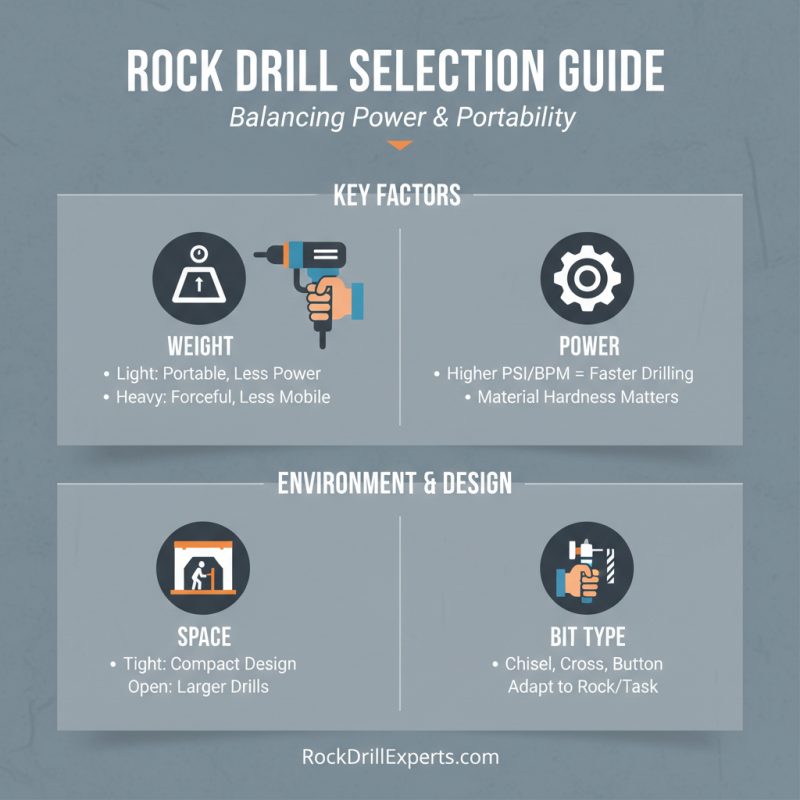
When evaluating different types of hand-held rock drills, it's vital to consider the specific needs of your projects. Weight is a key factor. Lighter models offer portability but may lack power. Heavier drills provide more force but can be cumbersome. Think about your working environment. Tight spaces may require a more compact design.
Next, consider the drill's power source. Electric drills are great for indoor work, while pneumatic options excel in remote locations. Each type has its pros and cons, and the right choice reflects your unique challenges. Remember to reflect on your previous experiences. Did you struggle with noise or vibration? Some models mitigate these issues better than others.
Finally, don't overlook the importance of ease of maintenance. A drill that is tough to service can quickly become a burden. Look for common issues users report. Feedback from fellow operators can provide insights into what lies beneath the surface. Ultimately, the best tool aligns with your needs while challenging you to improve your skills.
Key Specifications to Consider: Power, Weight, and Impact Rate
When selecting a hand-held rock drill, consider several key specifications. Power is crucial. A powerful drill can handle tough materials easily. Look for drills with a higher wattage or voltage for increased efficiency. However, more power can also mean more weight. This balance is essential. A lighter drill reduces fatigue during prolonged use, but it might sacrifice some performance.
Impact rate is another vital factor. This refers to the number of blows the drill delivers per minute. A higher impact rate can make drilling faster. Yet, if the impact rate is too high, it may lead to decreased control. It's a tricky balance. Too much power can create problems, like operator fatigue or reduced precision.
Always test the weight and power together. You want comfort, after all. Think about the duration of your work. Will you be using it for long hours? A drill that feels good initially may not feel the same in a few hours. Reflect on your needs and preferences. Each project may require a different balance of power, weight, and impact rate. Adjust your choice accordingly. Don't rush this decision; the right drill is essential for your work.
Assessing Safety Features and Ergonomics in Rock Drilling Equipment
When selecting a hand-held rock drill, safety features are crucial. According to industry reports, up to 30% of injuries in rock drilling occur due to equipment failure. Ensuring that the drill has proper safety mechanisms, like emergency shut-off switches and anti-vibration systems, can significantly reduce this risk. Workers must examine these features closely. An assessment of drill weight is equally important. A drill that is too heavy can lead to fatigue, which may increase the likelihood of accidents on the job site.
Ergonomics play a vital role in the design of rock drilling equipment. Reports indicate that poorly designed tools can lead to repetitive strain injuries for operators. A drill should be comfortable to hold and easy to maneuver. Look for models with adjustable grips and padded handles. These adjustments can greatly enhance user experience. However, many options still lack sufficient ergonomic design, which poses a challenge for users in prolonged tasks.
Investing in a drill that combines safety and ergonomics is essential for long-term efficiency. A balance between usability and protective features influences overall productivity. As operators consistently evaluate their equipment, the need for improvement in safety and comfort must never be underestimated.
How to Choose the Best Hand Held Rock Drill for Your Needs - Assessing Safety Features and Ergonomics in Rock Drilling Equipment
| Feature |
Description |
Importance |
Rating (1-5) |
| Weight |
The total weight of the drill affects portability and ease of use. |
High |
4 |
| Vibration Reduction |
Features that minimize vibration to protect user health over time. |
Critical |
5 |
| Drilling Efficiency |
Speed at which the drill can penetrate rock. |
High |
4 |
| Safety Features |
Inclusion of safety guards, emergency shut off, etc. |
Essential |
5 |
| Ergonomics |
Comfortable grip and balanced design for reduced fatigue. |
High |
4 |
Comparing Price Points and Cost-Effectiveness of Top Hand Held Rock Drills
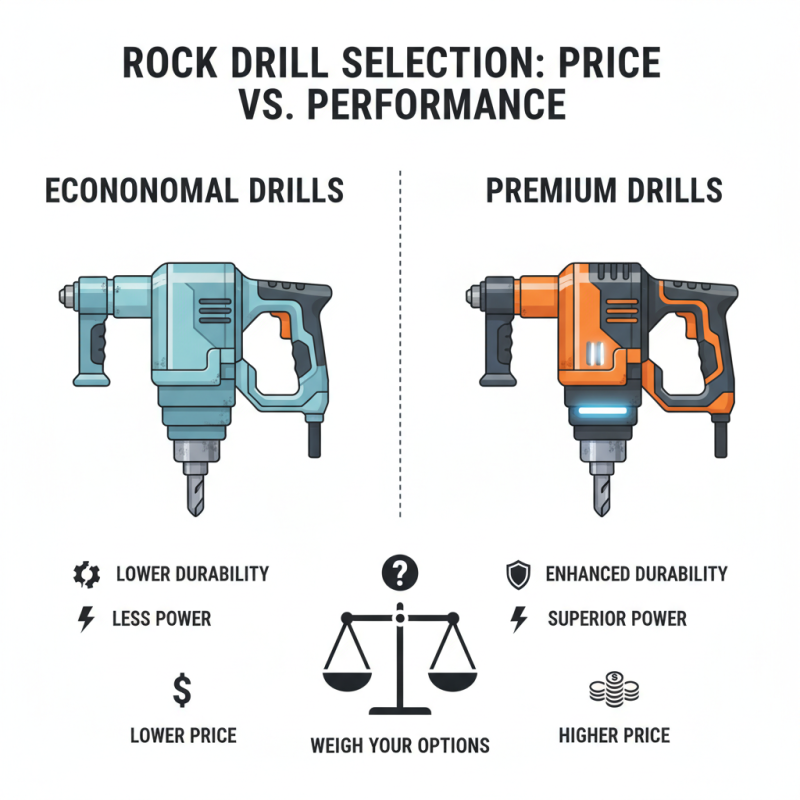
When selecting a hand-held rock drill, price points play a crucial role. Some drills are inexpensive but may lack durability or power. Others are costly yet offer advanced features that justify their price. Weighing these factors is essential for making an informed choice.
Cost-effectiveness should be a top priority. A cheaper model might save money initially, but are you sacrificing quality? Look for drills that balance price with performance. Consider features like weight, speed, and battery life. A lightweight drill can reduce fatigue and increase productivity.
Evaluate your specific needs too. Will you use the drill frequently? If so, investing in a higher-end model might make sense. It’s important to reflect on your usage patterns. Sometimes, paying more leads to better results and saves money in the long run.