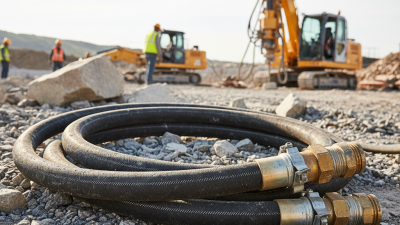


Choosing the right Rock Drill Air Hose is a practical safety decision, not a simple purchasing task. Underground headings are harsh. Sharp stone, oil mist, vibration, freezing temperatures, and constant movement can attack the hose within days. A suitable hose must match the drill’s working pressure, air volume, internal diameter, and connection style. Small mismatches matter.
Martin Keller, a pneumatic equipment maintenance consultant, explains: “A hose should be selected for the jobsite, not merely for the compressor.” That advice deserves attention. A hose rated for high pressure may still fail early when dragged across rough ground. A flexible design may improve handling, yet collapse under tight bends. The best choice balances pressure capacity, abrasion resistance, flexibility, temperature tolerance, and coupling security.
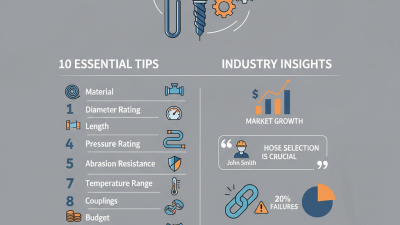
This guide presents seven practical tips for evaluating a Rock Drill Air Hose. It considers the details workers often notice too late, including bend radius, reinforcement layers, hose weight, and inspection access. Look closely at the connection points. They frequently suffer the first visible damage. Check the hose after each shift, even when it appears sound. That habit is easy to neglect.
There is no perfect hose for every mine, quarry, or construction site. I would not treat a catalog rating as a guarantee of field performance. Dust, water, and operator habits can change the result. Careful selection still reduces risk, improves drilling consistency, and limits avoidable downtime. The right hose should feel like part of the drilling system, not an afterthought.
Choosing a rock drill air hose starts with understanding its operating requirements, not its appearance. The hose must match the drill’s working pressure, air flow, internal diameter, and connection size. A narrow bore can restrict air delivery and reduce drilling performance. Pressure spikes matter. Select a hose with a working pressure comfortably above the system’s maximum pressure. Consider pulsation from the drill, especially during long shifts.
Tip: Measure the bore, length, and coupling size before ordering. A longer hose may lose pressure through friction, while an oversized hose can become heavy and difficult to control. Check the temperature range as well. Hot compressor air, cold outdoor conditions, and direct sunlight can all affect flexibility and service life. In my field experience, operators often focus on pressure but overlook abrasion from sharp rock, steel edges, and repeated dragging. That assumption can be costly.
A suitable hose should resist abrasion, crushing, oil exposure, and moisture found in compressed-air systems. Inspect the outer cover, fittings, and sealing areas before each shift. Look for bulges, cuts, exposed reinforcement, or loose couplings. Inspect it daily. Use secure connections and suitable restraints where movement could cause hose whipping. I would also record replacement dates and operating conditions. It is not perfect, but these notes reveal whether failures follow excessive heat, poor routing, or pressure changes. Recheck the requirements whenever the drill, compressor, or work location changes.
7 Tips for Choosing the Right Rock Drill Air Hose
Matching Hose Size to Airflow and Pressure Demands
Rock drills consume air in sharp, repeated bursts, not a smooth stream. That demand makes hose sizing more important than appearance. Check the drill’s required airflow in cubic feet per minute and its working pressure. Then compare those figures with the compressor’s output at the tool, not only at the tank. A hose with a narrow internal diameter can restrict airflow, even when its outside diameter looks substantial. Pressure drops quickly.
Hose length also affects performance. Long runs create more resistance, especially with several bends or quick-connect fittings. For many high-demand drills, a larger internal diameter helps preserve pressure at the rock face. Measure the actual hose bore, not just the coupling size. Couplings should match the hose and allow sufficient passage for the required airflow. A small connection can undermine an otherwise suitable hose.
Check the hose’s rated working pressure under the expected temperature and operating conditions. Never size it by burst pressure alone. Inspect for crushed sections, deep cuts, and stiff areas before each shift. In field checks, a pressure gauge near the drill can reveal losses hidden at the compressor. I once focused too heavily on pressure and overlooked airflow; the drill still performed poorly. That mistake was useful. Recheck the manufacturer’s airflow data, hose length, and fitting restrictions before changing equipment.
Matching hose size to airflow and pressure demands is essential for maintaining rock-drill performance. The chart shows approximate airflow capacity for a 100 ft hose at 100 psi inlet pressure with a maximum 5 psi pressure drop.
As airflow demand increases, select a larger internal diameter to reduce pressure loss. Actual results vary with hose length, couplings, fittings, temperature, and operating pressure. Verify the drill manufacturer’s airflow requirement before final selection.
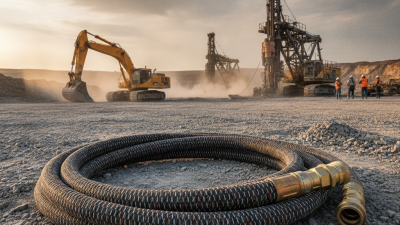
In mining and construction, an air hose faces sharp stone, mud, vibration, and heavy equipment. Choose materials built for abrasion. Reinforced rubber usually tolerates repeated impact and rough handling. Synthetic covers can reduce weight, but their resistance varies widely. Check the construction carefully. A thick outer layer helps protect the reinforcement from cuts and crushing. Materials should also resist oil, moisture, and sunlight when site conditions demand it.
Match the hose’s working pressure with the drill’s requirements, allowing a practical safety margin. Never select a hose from burst pressure alone. Check operating temperature as well. Cold mornings can make some materials stiff and easier to crack. Heat from compressors may weaken unsuitable compounds. Respect the minimum bend radius. Tight curves create hidden stress. This detail is often ignored.
Examine the reinforcement, couplings, and end fittings before purchase. Strong connections matter as much as the hose wall. Choose lengths that avoid dragging, sharp bends, and unnecessary joints. Ask suppliers for pressure, temperature, abrasion, and chemical-resistance test data. Applicable safety standards add useful evidence, though paperwork cannot replace inspection. On site, I look for blisters, exposed threads, flattened sections, and small cuts. I once treated a tiny cover cut as harmless; it was not. No material is perfect. Recheck the selection after real field use.
A rock drill air hose is only as dependable as its connection points. Check the coupling profile before checking hose length. Thread size, sealing method, working pressure, and flow capacity must match the drill and compressor. A mismatched fitting may leak loudly, heat up, or separate under vibration. ISO 4414 requires pneumatic systems to consider pressure, connection security, and safe hose routing. These details matter around wet rock, dust, and sharp steel edges.
Tip: Compare every fitting with the drill manufacturer’s technical sheet. Do not rely on appearance alone.
Use couplings with compatible materials and locking systems. The male and female halves should engage fully, with no forced rotation or visible gap. Inspect threads for crushed peaks and check seals for cuts. The National Safety Council’s Injury Facts 2024 reported 1,069 preventable workplace deaths in the United States during 2022. A loose pressurized connection can turn a small maintenance error into a serious hazard. That risk deserves more than a quick hand test.
Tip: Pressurize the hose gradually, then listen for leaks. My own check would include a clean rag around the joint; escaping air often becomes visible through movement. Never “fix” poor compatibility with extra tape or an improvised adapter. It may work briefly, but that is not proof of safety. Recheck the assembly after the first drilling cycle, because vibration can expose weaknesses missed during installation.
| Tip | Selection Dimension | What to Check | Useful Technical Guidance | Compatibility or Safety Note |
|---|---|---|---|---|
| 1 | Match the hose inside diameter | Select the inside diameter according to the drill air inlet, hose length, required airflow, and acceptable pressure drop. A hose that is too small can restrict airflow and reduce drilling performance. | Common compressed-air hose inside diameters include 3/4 in, 1 in, and 1-1/4 in. Longer runs and high-air-consumption tools generally require a larger bore. | Do not choose by outside diameter alone. Confirm the actual inside diameter and the tool manufacturer’s minimum air-flow requirement. |
| 2 | Verify pressure ratings | Compare the hose working pressure with the compressor pressure and the maximum pressure permitted by the rock drill. The hose assembly must be rated for the complete operating system. | Working pressure is the maximum continuous operating pressure. Burst pressure is not an operating limit. Use the lowest-rated component as the practical system limit. | Never use burst pressure as a design value, and never exceed the rating of the hose, coupling, fitting, or tool inlet. |
| 3 | Check coupling and fitting size | Confirm that the coupling bore, hose barb or stem, ferrule, and fitting passage are suitable for the hose size. The connection should provide a secure grip without sharply reducing the air passage. | A nominal 1 in coupling does not always have the same internal passage as another 1 in coupling. Compare actual bore dimensions when airflow is critical. | A visibly similar coupling may still have a different sealing method, locking mechanism, or pressure rating. |
| 4 | Confirm thread and sealing compatibility | Identify the thread standard and size on the drill inlet, hose-end fitting, swivel, and adapter. Check whether the joint seals on the thread, with a gasket, or with an O-ring. | NPT and BSP threads are different standards and should not be forced together. Thread size alone does not prove compatibility because pitch and thread form may differ. | Do not mix incompatible threads or rely on excessive tightening to correct a mismatch. Use the correct approved adapter when needed. |
| 5 | Choose material for the worksite | Select a hose cover and tube that tolerate abrasion, oil mist, moisture, impact, and outdoor conditions found around drilling equipment. A flexible hose can improve handling, but it still needs adequate abrasion resistance. | Synthetic-rubber and thermoplastic constructions are commonly used for compressed air. Reinforcement may include textile layers or wire, depending on pressure and service requirements. | Confirm chemical compatibility with compressor oil, cleaning agents, and any fluids present at the worksite. |
| 6 | Allow for temperature and movement | Check the hose temperature range for the lowest outdoor temperature, the compressed-air temperature, and heat near the compressor. Select a length that avoids sharp bends, stretching, and pull on the fittings. | Temperature limits vary by hose construction. A bend radius is specified by the hose manufacturer and should be respected during installation and operation. | Do not kink the hose or use it below its stated minimum bend radius. Repeated bending at the coupling can cause premature failure. |
| 7 | Secure and inspect the complete assembly | Use correctly sized clamps, crimped ends, safety cables, whip checks, and locking couplings where required. Inspect for cuts, bulges, exposed reinforcement, leaking connections, and damaged locking parts. | Isolate and depressurize the line before disconnecting. Test the assembled connection at a controlled pressure and follow applicable workplace safety procedures. | Never disconnect a pressurized air hose. Replace a hose showing structural damage rather than patching it for continued high-pressure service. |
Comparing Safety, Maintenance Needs, and Total Operating Cost
A rock drill hose is not just a pressure tube. It is a moving safety component beside workers, dust, and sharp stone. ISO 4414 recommends controlling stored pneumatic energy and preventing hose movement after connection failure. Use rated couplings, whip checks, and abrasion-resistant covers. OSHA also limits compressed-air cleaning pressure to below 30 psi with effective chip guarding. That rule does not make a drilling hose safe by itself.
Total cost often hides inside air loss. The U.S. Department of Energy reports that compressed air can consume 10% or more of industrial electricity. The Compressed Air Challenge notes that leaks may waste 20% to 30% of compressor output in poorly maintained systems.
A hose with excessive pressure drop increases compressor demand. A hose with weak reinforcement may fail sooner. Both choices become expensive.
Inspect the hose before every shift. Look for bulges, cuts, exposed reinforcement, and damaged threads. Keep bends gradual. Avoid dragging it across fresh rock. Maintenance records should include pressure tests, replacement dates, and recurring leak locations.
In practice, the cheapest hose is rarely the lowest-cost hose. Still, field assumptions can be wrong. A larger bore may reduce pressure loss, but it can increase weight and handling strain. Check the drill’s airflow requirement, working pressure, temperature, and actual site conditions before purchasing.