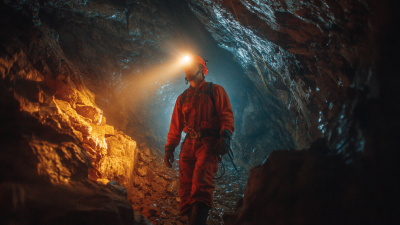

A Safety Mining Lamp is more than a light attached to a helmet. Underground, it helps workers read uneven ground, identify equipment, and communicate in low-visibility areas. Yet brightness alone tells only part of the story. A narrow beam may illuminate a distant tunnel while leaving nearby cables or loose rock in shadow. That assumption is easy to make—and worth questioning.
The U.S. Mine Safety and Health Administration recorded 40 mining fatalities in 2023. This figure describes the wider hazards of mining; it does not mean a lamp alone can prevent incidents. It does underline why dependable equipment and careful selection matter. NIOSH research on mine illumination examines how lighting conditions affect visibility and hazard recognition. Its work offers a useful technical reference when comparing beam patterns, usable illumination, and glare—not simply advertised brightness.
Choosing a suitable lamp means considering the actual shift and workplace. Check runtime against the longest expected shift, and consider how the battery performs as it ages. Assess light distribution at close range and down the tunnel. Also review impact resistance, water and dust protection, helmet compatibility, switch usability with gloves, and the availability of replacement parts. Manufacturer specifications are useful, but they should be checked against independent testing and site requirements. A label can look reassuring. It is not the whole answer. The right choice balances verified performance, worker comfort, maintenance, and the conditions underground.
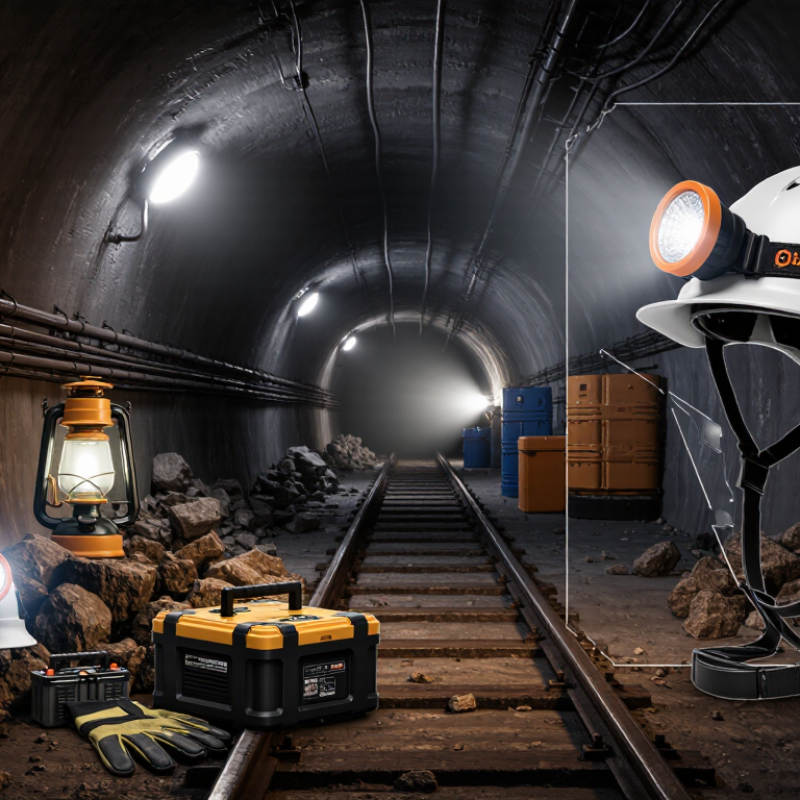
A safety mining lamp is more than a bright light on a helmet. It helps workers see loose rock, tool edges, floor changes, and hand signals in confined spaces. The right lamp depends on the environment, not just the task. Conditions vary. A lamp suited to a dry access tunnel may be unsuitable near water, dust, or hazardous gases.
In areas where flammable gas or combustible dust may be present, check that the lamp is rated for the specific hazard and site conditions. Ordinary brightness is not enough. Also consider vibration, impact, temperature, and moisture. A weak seal can fail after repeated exposure to dripping water or fine dust. Battery runtime matters too: a shift can run longer than expected, and a dim lamp may make small obstacles harder to judge.
Match the beam to the work. A focused spot can help inspect a distant surface, while a wider beam can reveal nearby footing and equipment. Check the lamp’s technical documents and maintenance instructions, then confirm suitability with the site’s safety personnel. A lamp can look rugged and still be wrong for a particular heading. Field conditions are not always tidy, so reassess the choice when work moves to a different area.
A safety mining lamp should match the hazards identified at the worksite, not just look rugged. Check its certification marking and confirm it applies to the exact lamp model and configuration, including the battery and charger. Certification systems differ by region, so verify the certificate with the issuing body or an official directory. Small print matters. Look for approval covering the relevant gas or dust hazard, equipment group, and temperature limits. A lamp suitable for one classified area may not be suitable for another.
Do not confuse an IP rating with hazardous-area approval. An IP rating describes resistance to dust and water; it does not, by itself, show that equipment is safe where flammable gas or combustible dust may be present. Compare the lamp’s protection markings with the site’s documented hazard classification, and ask a qualified safety professional if the labels are unclear. In a practical inspection, check that markings remain readable and match the supplied paperwork. Not the same thing. Damaged seals, altered parts, or an unapproved battery can undermine the intended protection. I would not rely on a faded label or a seller’s summary alone; that may feel overly cautious, but it is worth checking. Keep the records.
| Check | What the rating or approval means | What to verify before purchase | Practical selection guidance |
|---|---|---|---|
| Mine-specific approval | A mine may require equipment approved for its jurisdiction and intended use. In the United States, MSHA approvals for permissible electric cap lamps are addressed in 30 CFR Part 19. | Check the approval marking and documentation against the applicable authority’s records. Confirm the approval covers the exact lamp configuration, including its battery and any specified accessories. | Treat the mine operator’s requirements and local regulations as controlling; a general explosion-protection claim is not a substitute for required mine approval. |
| ATEX equipment category | Under Directive 2014/34/EU, Group I equipment is intended for mines susceptible to firedamp and/or combustible dust. Categories M1 and M2 indicate different protection levels and operating conditions. | Look for the complete marking, the applicable equipment group and category, and the certificate or declaration details. Confirm the category matches the mine’s required operating conditions. | Do not infer suitability from the word “ATEX” alone. Check the complete marking and confirm acceptance with the site’s safety authority. |
| IECEx certification and EPL | IECEx certification is based on the IEC 60079 series for explosive atmospheres. For Group I mining equipment, Equipment Protection Levels include Ma and Mb, indicating different protection levels and conditions of use. | Check the certificate number in the IECEx online certificate system and compare its scope, equipment marking, and special conditions with the lamp being supplied. | IECEx and ATEX are separate schemes. Verify that the certification is accepted in the country and mine where the lamp will be used. |
| Explosion-protection marking | The full Ex marking identifies the protection concept and the equipment’s intended group and conditions. A mining lamp’s suitability depends on its complete certified marking—not just a generic “explosion-proof” description. | Match the marking to the mine’s hazards, such as firedamp or combustible coal dust, and check any stated ambient-temperature limits and certificate conditions. | Do not assume a gas-group marking used for surface industries automatically establishes suitability for underground mining. Confirm Group I requirements where applicable. |
| Ingress protection (IP) rating | Under IEC 60529, the first digit describes protection against solid particles and the second against water. IP67 denotes dust-tight protection and tested temporary immersion under specified conditions; IP68 is for immersion under conditions specified by the manufacturer. | Check the test standard, stated immersion conditions, and whether seals, charging ports, and connectors are covered by the rating. | Choose a rating suited to the expected water and dust exposure. An IP rating does not certify explosion protection or mine safety approval. |
| Impact resistance and construction | An IK code, where provided, classifies resistance to mechanical impact under IEC 62262. It is separate from IP and Ex ratings. | Check the stated IK level, test documentation, lens and housing materials, and whether the complete lamp was assessed. | Consider drops, knocks, abrasion, and routine handling underground. Do not treat a rugged housing as evidence of hazardous-area certification. |
| Battery and charging system | The battery and charging arrangement can affect a lamp’s approved configuration and safe use in a hazardous area. | Use only the battery, charger, and replacement parts specified in the approval documents and manufacturer instructions. Check charging-location requirements. | Confirm charging procedures with the mine operator. Do not replace cells or modify wiring unless the approved instructions explicitly permit it. |
| Documents and traceability | Certificates, declarations, markings, and operating instructions provide evidence of the equipment’s assessed scope and conditions of use. | Request legible product markings, current certificates or approval records, instructions, and any special conditions. Ensure model and configuration details agree across documents. | If markings or documents are missing, inconsistent, or unverifiable, pause procurement and consult the relevant mine safety authority. |
Note: Certification requirements depend on the mine, jurisdiction, and specific hazards. Always verify the exact lamp configuration and approval scope with the mine operator or competent safety authority.
Choose brightness by the task, not the headline lumen number. A high lumen rating can still produce a harsh hotspot and dim corners. NIOSH’s Evaluation of LED Cap Lamps in Underground Coal Mines examined illuminance and visual performance, useful reminders that delivered light matters. Look for a beam that lights the floor, nearby tools, and the path ahead without glaring off wet rock. A focused beam reaches farther down a tunnel; a wider beam helps with close work and peripheral awareness. Neither shape wins everywhere.
Runtime figures need careful reading. ANSI/PLATO FL 1-2019 defines flashlight runtime as the time until output falls to 10 percent of its initial level, not the hours spent at full brightness. Check whether the maker’s test uses the same setting you plan to use. Cold shifts and repeated high-output use can also reduce practical runtime. Carrying a spare battery adds weight. Still, running out of light is worse. One imperfect habit: people often compare maximum lumens and forget to compare beam pattern. For a long shift, balance usable brightness, a suitable spot-and-flood mix, and tested runtime.
A safety mining lamp must survive grit, vibration, sweat, and repeated knocks. Check the housing, lens, seals, and cable or battery connections for damage-resistant construction. The IEC 60529 ingress-protection code offers a useful reference: IP6X indicates dust-tight protection, while IPX4 indicates resistance to splashing water. Match the rating to the mine’s conditions and required site specifications; a rating alone does not prove long-term durability.
Fit matters. The lamp should sit steadily on the helmet without pressing painfully against the forehead. Adjust the strap with gloves on, then look down and turn your head; shifting or bouncing is a warning sign. Weight matters, too. A heavier unit can feel manageable at first, then become tiring over a full shift. The International Labour Organization estimates that mining employs about 1% of the global workforce but accounts for roughly 8% of fatal occupational accidents. That figure is no lamp-specific measure, but it underlines why dependable equipment and practical checks matter.
Ease of use shows up in small moments. Can you operate the switch with cold fingers? Is the charge indicator visible in dim light? Compare tested runtime at the brightness you actually use, not only the maximum claim. I would still recheck fit after changing helmets; it is easy to miss a loose strap during a rushed gear check. A quick inspection helps, but it cannot replace site procedures.
Compare durability, fit, weight, and ease of use when assessing a lamp for mining work.
Suggested assessment weights: durability 30%, fit 25%, weight 20%, and ease of use 25%. These are guide values for comparing options, not laboratory measurements or product ratings. Always verify that a lamp meets the safety requirements for its intended workplace.
Matching Lamp Features to Work Tasks and Maintenance Needs
Match the lamp to the work, not just its brightness rating. A narrow beam can help inspect a cable run, while a broader beam may suit walking through uneven passages. For close repairs, check whether the light reaches the work area without harsh glare.
Runtime matters too. Compare the stated operating time with the longest shift, allowing for battery aging and colder conditions. A comfortable fit matters after several hours underground.
Tips: Check controls with gloves on. Confirm the lamp’s approved rating and care instructions against site requirements. Keep charging and inspection records.
Maintenance needs can change the best choice. A model with a replaceable battery may reduce downtime, but only if trained staff can handle the swap and inspect the contacts. Sealed designs may be simpler to clean after dusty shifts.
Check for cracked housings, loose straps, dimming, and charging problems before use. Small faults are easy to overlook. I would not assume a lamp is dependable just because it worked yesterday; usage and wear vary, so follow the maker’s inspection schedule and remove damaged equipment from service.