

Choosing the right Ventilation Machine is not simply a matter of comparing airflow figures. It requires a practical assessment of room size, occupancy, humidity, filtration, noise, maintenance, and energy use. A quiet bedroom system may fail in a crowded workshop. A powerful unit may waste energy in a small office.
The UNEP Global Status Report for Buildings and Construction 2023 states that buildings consume about 30% of global final energy. Ventilation equipment can influence both indoor health and operating costs. The World Health Organization also identifies adequate ventilation as an important measure for improving indoor air quality. ASHRAE Standard 62.1 provides widely used guidance for acceptable ventilation in commercial spaces, but local requirements still matter.
Professor Lidia Morawska, a leading indoor-air researcher, has said, “Ventilation is the most important factor for reducing airborne transmission.” Her point is practical: moving air is not enough. The air must be clean, correctly distributed, and properly exhausted.
Check the details.
Look for certified airflow performance, filter efficiency, sound ratings, heat-recovery data, and accessible service panels. Measure the room before selecting capacity. Do not trust marketing claims alone. Real buildings rarely behave like laboratory spaces. Doors open, filters clog, and occupants change.
A sensible choice balances protection, comfort, efficiency, and maintenance. I would also leave room for uncertainty. Product labels can appear precise, yet installation quality often decides the final result. A qualified engineer can verify the design before purchase.
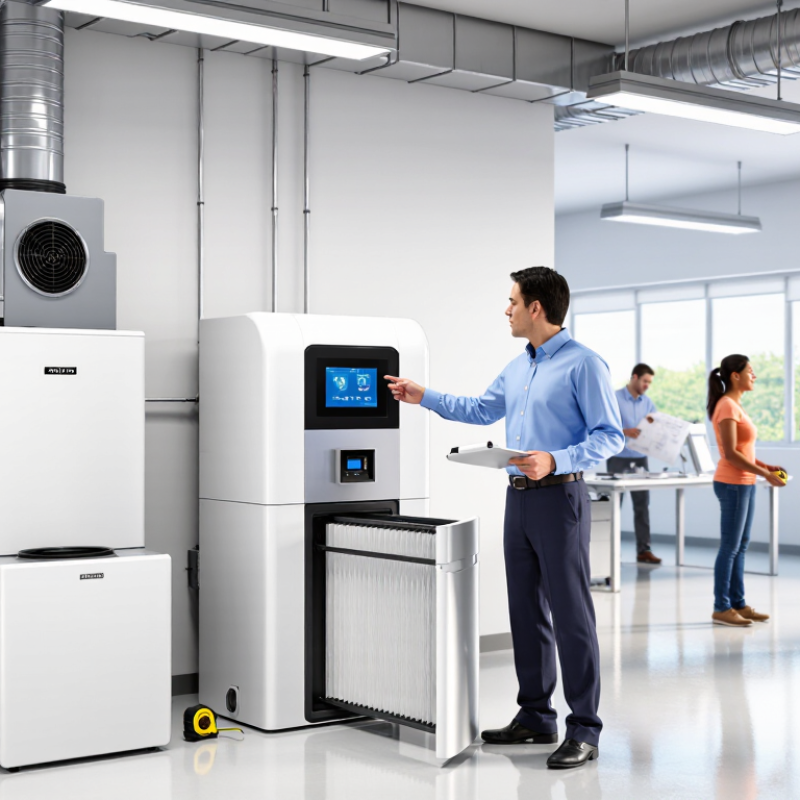
Define the indoor air problem before comparing airflow figures. A bedroom, classroom, and workshop need different controls. Record occupancy, operating hours, room volume, moisture sources, and outdoor pollution. CO2 can show insufficient outdoor air, but it cannot detect every pollutant. It is only one signal.
The U.S. EPA reports that indoor pollutant concentrations are often two to five times higher than outdoors, and sometimes exceed outdoor levels by more than 100 times. Source control, filtration, and air exchange must work together.
Set measurable indoor air quality goals. The WHO 2021 Air Quality Guidelines recommend an annual PM2.5 level of 5 µg/m³ and a 24-hour level of 15 µg/m³. These are health-based guidelines, not a complete equipment specification.
Humidity also matters. Persistent condensation can encourage mould, while overly dry air may irritate occupants.
ASHRAE Standard 62.2 uses dwelling size and occupancy to determine residential ventilation needs. One universal machine size is unrealistic.
Look beyond maximum airflow. Check airflow at the system’s actual duct resistance, sound levels, filter performance, and control response. Heat recovery can reduce energy loss in cold or hot climates. Demand-controlled ventilation may help variable occupancy areas.
Commissioning is essential. A poorly balanced system can waste energy and still leave stagnant corners.
I would not trust a brochure alone. Measure CO2, PM2.5, temperature, and humidity after installation, then adjust the settings. Some goals may need revision.
Ventilation machines differ by airflow direction, filtration, and heat recovery. Exhaust-only systems remove stale air from kitchens, bathrooms, or workshops. Replacement air enters through leaks or dedicated inlets. Supply-only systems push filtered outdoor air indoors. They can pressurize rooms and reduce uncontrolled infiltration. Balanced systems exhaust and supply similar air volumes. HRV units transfer sensible heat, while ERV units also transfer part of the moisture load. That distinction matters in humid climates. Exhaust-only designs also need pressure checks near combustion appliances.
Operating conditions matter more than labels. The U.S. EPA reports that indoor pollutant levels can be two to five times higher than outdoors, although measurements vary. ASHRAE Standard 62.1-2022 uses occupancy and floor area to define outdoor-air requirements. A crowded training room needs more airflow than a lightly used storage room. Designers should check fan curves, external static pressure, filter loading, and noise. A machine rated at 1,000 m³/h may deliver much less after dirty filters and long ducts. The casing number is not the result.
Energy changes the decision. The International Energy Agency’s Buildings report states that buildings consume about 30% of global final energy. Heat recovery can reduce ventilation heating and cooling loads. However, results depend on climate, operating hours, frost control, and maintenance. HRV often suits dry or cold conditions. ERV may help moderate indoor humidity. Still, ERV is not automatically better. A careful comparison includes measured airflow, recovery efficiency, controls, filter access, and whole-life cost. Some specifications look impressive. They may not survive real operation.
Exhaust-only systems remove stale air from kitchens, bathrooms, or workshops. Replacement air enters through leaks or dedicated inlets. Supply-only systems push filtered outdoor air indoors. They can pressurize rooms and reduce uncontrolled infiltration.
Room size alone does not determine the right airflow capacity. Occupancy matters just as much. A small meeting room with ten people can need more ventilation than a large storage area. Each person adds heat, moisture, and exhaled carbon dioxide. The machine must remove these loads steadily.
Start by measuring the room’s length, width, and height. Multiply these figures to find the room volume. Then use the recommended air changes per hour for the room’s purpose. The basic calculation is airflow equals room volume multiplied by air changes, divided by 60.
For example, a 60-cubic-metre office requiring six air changes needs about 360 cubic metres per hour.
Local building guidance should confirm the final target.
Occupancy can change during the day. I have seen a quiet training room become uncomfortable within minutes after extra chairs were added. A carbon dioxide monitor can reveal this problem more accurately than guesswork. Choose adjustable airflow when room use varies. Check the machine’s rated airflow under real resistance, not only its free-air figure. Dirty filters, long ducts, and narrow grilles reduce performance. That detail is easy to miss. Oversizing is not always better, either. Excessive airflow may create drafts, noise, and unnecessary energy use. I would recheck the calculation after installation, because the first estimate is rarely perfect.
Choosing the right ventilation machine requires more than comparing airflow figures. The U.S. Environmental Protection Agency reports that heating, ventilation, and air conditioning can represent about 40% of commercial building energy use. Therefore, check specific fan power, motor controls, heat recovery, and seasonal efficiency. A machine using less electricity at normal demand may outperform a larger unit running continuously. Oversizing is common, and it quietly wastes energy.
Filtration needs equal attention. Review the filter’s tested efficiency under ASHRAE 52.2 conditions, not only marketing language. Higher filtration can improve indoor air quality, but it also increases resistance and energy consumption. Ask for pressure-drop data at the intended airflow. The U.S. Centers for Disease Control and Prevention links better ventilation and filtration with reduced airborne exposure, although no filter removes every risk. That limitation matters.
Noise is measurable. The World Health Organization recommends less than 30 dB(A) in bedrooms at night for good sleep quality. Check sound-power data at several fan speeds, then listen near walls and occupied desks. Maintenance is often underestimated. Confirm filter access, replacement frequency, drain cleaning, sensor calibration, and spare-part availability. A clogged filter raises pressure and reduces airflow. I have seen efficient systems perform poorly because nobody checked them. The specification looked perfect. The routine was not.
How to Choose the Right Ventilation Machine?
Installation requirements should guide your choice, not the catalogue price. Measure room volume, duct length, ceiling clearance, electrical capacity, and outdoor-air access before ordering. A compact heat-recovery unit may need 600 millimeters of service space. It also needs drainage, frost protection, and accessible filters. ASHRAE Standard 62.1 and 62.2 provide ventilation guidance, but local building rules still control the installation. Do not assume one airflow setting suits every room.
Safety features deserve equal attention. Choose equipment with airflow failure alarms, filter-change indicators, fire or smoke dampers, and safe electrical isolation. Carbon dioxide sensors can adjust airflow when occupancy changes. This prevents waste in empty meeting rooms. The U.S. Environmental Protection Agency reports that indoor pollutant levels can be two to five times higher than outdoors, and sometimes much higher. Poorly sealed ducts can quietly worsen that problem. Commissioning matters. A calibrated airflow test is more useful than a promising specification sheet.
Total cost includes installation, controls, filters, electricity, cleaning, repairs, and eventual replacement. The International Energy Agency’s Buildings report states that building operations consume about 30% of global final energy. Efficient ventilation can reduce demand, but fans running continuously may erase those gains. Compare annual energy use, not only purchase prices. A cheap machine with expensive filters is not cheap. I have seen estimates miss access panels and lifting equipment. That oversight is common. Ask for a five-year cost model, then challenge every assumption.
| Machine Type | Typical Airflow | Best Use | Installation Requirements | Important Safety Features | Typical Noise | Indicative Total Cost |
|---|---|---|---|---|---|---|
| Heat Recovery Ventilator (HRV) | 100–400 m³/h | Cold or heating-dominated climates where indoor humidity must be reduced. | Dedicated outdoor-air and exhaust ducts, wall or roof penetrations, condensate drainage, electrical supply, and access for filter servicing. | Frost protection, thermal overload protection, filter-change indicator, backdraft prevention, and fire-rated duct penetrations where required. | 25–45 dB(A) | US$3,000–8,000 installed |
| Energy Recovery Ventilator (ERV) | 100–400 m³/h | Mixed or humid climates where both heat and indoor moisture transfer should be moderated. | Balanced supply and exhaust ductwork, exterior grilles, condensate management as specified by the design, electrical supply, and service clearance. | Overheat protection, frost or low-temperature control, filter monitoring, motor protection, and safe drainage where applicable. | 25–45 dB(A) | US$3,500–9,000 installed |
| Central Exhaust Ventilation System | 100–300 m³/h | Bathrooms, kitchens, utility rooms, and homes requiring continuous removal of stale or moist air. | Exhaust duct routes to the exterior, weatherproof termination, backdraft damper, electrical connection, and make-up air provisions where needed. | Non-combustible or appropriately rated ducting, overload protection, backdraft damper, and humidity or timer controls. | 25–40 dB(A) | US$800–3,000 installed |
| Single-Room Wall Ventilator | 20–100 m³/h | Bedrooms, offices, apartments, or rooms where installing a whole-house duct system is impractical. | Exterior wall opening, correct sleeve and weather seal, local electrical supply, and adequate clearance around the indoor unit. | Overheat protection, washable or replaceable filter, insect screen, backdraft control, and safe wall penetration detailing. | 20–40 dB(A) | US$500–2,000 installed |
| Inline Duct Fan | 150–1,000 m³/h | Supplementing airflow in bathrooms, workshops, storage areas, or long duct runs. | Correct duct diameter, mounting supports, access for cleaning, electrical isolation, and a suitable exterior termination. | Motor thermal protection, secure mounting, guard protection where accessible, backdraft damper, and fire stopping around penetrations. | 30–55 dB(A) | US$300–1,500 installed |
| Portable Air Cleaner with Fan | Air recirculation; rated by CADR rather than outdoor-airflow capacity | Reducing airborne particles in occupied rooms when outdoor-air ventilation cannot be easily added. | Stable floor placement, unobstructed air inlet and outlet, a nearby electrical outlet, and adequate clearance from curtains or furniture. | Tip-over stability, overheat protection, enclosed fan, filter replacement indicator, and an approved power cord. | 20–55 dB(A) | US$150–800 purchase and operation setup |
Cost ranges are indicative 2026 planning estimates in U.S. dollars for typical residential applications. Actual pricing depends on building size, labor rates, duct length, electrical work, wall or roof access, controls, permits, and local code requirements. Portable air cleaners filter recirculated air and do not replace outdoor-air ventilation.