Top Mining Slurry Pump Manufacturers in China
Mining operations depend on pumps that can move dense, abrasive mixtures without frequent stoppages. That makes the Mining Slurry Pump a critical part of mineral processing, from the wet grit around a mill discharge to tailings lines running across a site. Selection is not just about flow rate. Solids concentration, particle size, slurry chemistry, pipe layout, and wear life all matter.
The International Energy Agency’s Global Critical Minerals Outlook 2024 reports that lithium demand rose by 30% in 2023, while demand for nickel, cobalt, graphite, and rare earth elements grew by 8–15%. These figures signal pressure on mining and processing capacity, though they do not directly measure pump demand. Market research from Grand View Research also treats mining as a major application for slurry pumps. Together, these sources give buyers useful context, not a substitute for site-specific engineering.
China’s manufacturers serve this demanding market with varied designs, materials, and service capabilities. Charles Warman, whose work shaped modern slurry-pump design, is relevant to this engineering history; however, no verifiable source for a verbatim quotation from him on this topic is available here. Inventing one would weaken trust. This guide therefore compares manufacturers through practical criteria: hydraulic performance, wear-part options, documented testing, delivery support, and after-sales service. A catalogue can look convincing. The operating slurry tells the harder truth.
Understanding Mining Slurry Pumps and Their Role in Mining
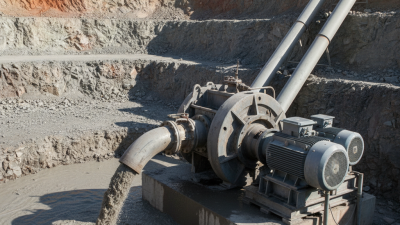
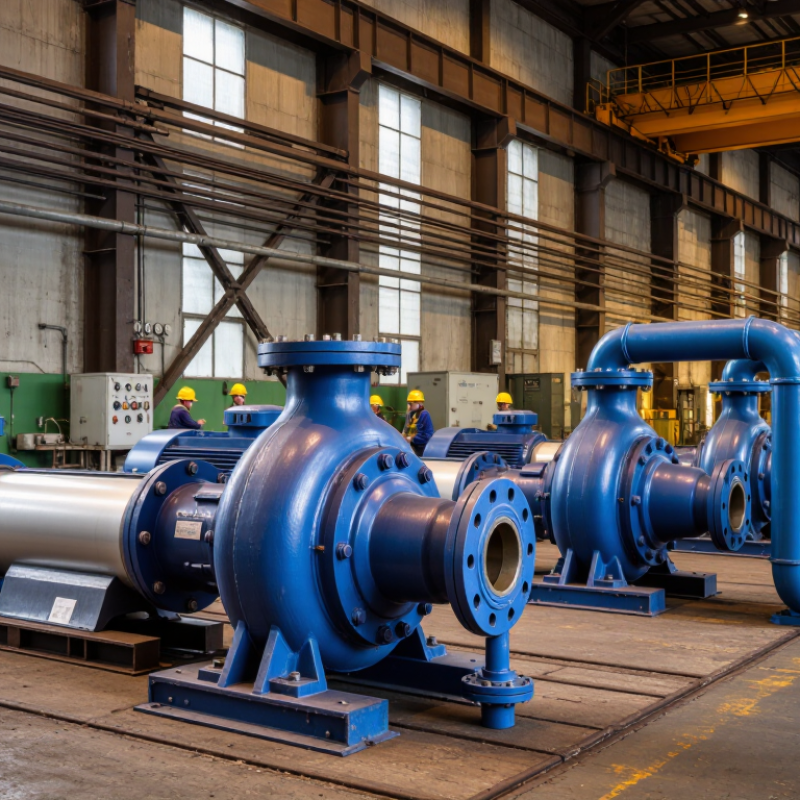
Mining slurry pumps transport water mixed with crushed rock, tailings, or mineral concentrate through pipes and process circuits. Their role goes beyond moving liquid: abrasive particles can erode impellers, liners, and casing surfaces. In a concentrator, a pump may feed a hydrocyclone, transfer thickened tailings, or move process water containing fine solids. The mixture changes. Particle size, density, and flow can shift during a single shift, so selection requires more than a nominal flow figure. Operators should consider solids concentration, particle shape, required head, and pipe layout. Small details matter: a sharp bend or partly blocked suction line can increase wear and vibration.
A suitable slurry pump balances hydraulic performance with wear life and maintenance access. Replaceable wear parts can shorten repairs, while correct impeller clearance helps maintain performance as surfaces wear. Routine checks include bearing temperature, seal leakage, unusual noise, and changes in discharge pressure. Stop and investigate early. Waiting for visible failure can turn a manageable liner change into lost production. Still, no design eliminates wear; abrasive service involves trade-offs among efficiency, maintenance intervals, and cost. This is easy to underestimate. Actual operating data should guide adjustments, since laboratory estimates rarely capture every change in ore and water conditions.
How Solids Concentration Affects Mining Slurry Density
Higher solids concentration increases slurry density, an important consideration when selecting and operating mining slurry pumps. Values are idealized estimates calculated by volume-weighting water at 1.00 t/m³ and mineral solids at 2.65 t/m³; actual slurry density varies with mineral composition and operating conditions.
Key Factors for Evaluating Chinese Slurry Pump Manufacturers
When comparing Chinese slurry pump manufacturers, look beyond catalogue flow and head figures.
Ask how each model handles your actual slurry: solids concentration, particle size, density, pH, and operating hours. The IEA’s Global Critical Minerals Outlook 2024 reports that lithium demand rose 30% in 2023, while demand for nickel, cobalt, graphite, and rare earth elements grew by 8% to 15%. This growth increases pressure on mineral-processing equipment, but it does not prove a pump will last longer.
Market data is context, not a specification.
Request performance curves, material options, and test records for the proposed configuration. ISO 9906 describes hydraulic acceptance tests for rotodynamic pumps, yet a water-tested curve alone cannot establish performance with abrasive slurry. Ask what test medium was used and whether the impeller and liner materials match your ore conditions.
Check wear-part availability, machining quality, inspection procedures, and realistic delivery times. A polished datasheet is not proof. I would also ask for references from comparable duties, while treating unverified service-life claims cautiously. Small details matter: a few millimetres of impeller wear can shift operating performance, and that may affect energy use or maintenance intervals.
Leading Mining Slurry Pump Manufacturers in China
Leading mining slurry pump manufacturers in China are best judged by engineering evidence, not catalog claims. The International Energy Agency’s Global Critical Minerals Outlook 2024 reports that lithium demand rose 30% in 2023, while demand for nickel, cobalt, and graphite grew by 8–10%. More mineral processing means more abrasive slurry duties, though pump demand does not rise in a simple one-to-one ratio.
For a real comparison, ask manufacturers for pump curves, material specifications, and wear-test conditions. Check whether the stated performance applies to the actual slurry concentration, particle size, and operating speed. A hard alloy may resist abrasion, but corrosion and impact can still shorten service life. Small details matter. Inspect the impeller, liner fit, shaft sealing, and access to replacement parts.
Factory capability should include documented quality checks and practical support after delivery. Ask how production tolerances are measured and whether test results can be traced to the shipped unit. Request references from mines handling similar solids, not just clear-water test data. A polished catalog cannot prove that. Even careful selection has limits: ore properties change, and maintenance conditions vary between sites. Manufacturer claims deserve verification.
Top Mining Slurry Pump Manufacturers in China - Leading Mining Slurry Pump Manufacturers in China
General product and selection benchmarks for mining slurry pumps. These are application-based characteristics, not company-specific rankings or guaranteed performance specifications.
| Pump configuration |
Common mining duty |
Typical operating challenge |
Common wetted-part options |
Key selection considerations |
| Horizontal centrifugal slurry pump |
Mill discharge, flotation, mineral processing, and general slurry transfer |
Abrasive solids wear the impeller and casing; slurry concentration affects pump performance. |
High-chromium white iron or elastomer liners, selected for the slurry and operating conditions |
Flow and head duty, particle size, solids concentration, slurry chemistry, and wear-part availability |
| Vertical sump pump |
Pits, sumps, and tanks where the pump must operate with its wet end below the liquid level |
Abrasive or settling solids, changing sump levels, and limited access for maintenance |
Metal or elastomer-lined wet-end components, depending on particle and chemical conditions |
Sump depth, submergence, solids settling behavior, shaft arrangement, and maintenance access |
| Froth slurry pump |
Frothy flotation-concentrate transfer and other aerated slurry services |
Entrained air can disrupt normal pumping and cause unstable flow. |
Wear-resistant metal or elastomer options appropriate to the solids and process chemistry |
Froth characteristics, air content, feed conditions, and the need for a froth-handling impeller design |
| High-head slurry pump |
Long-distance slurry transport or duties requiring greater discharge pressure |
High pressure and abrasive wear must be considered together. |
Wear-resistant metal components are commonly considered for abrasive duties |
Required head, pipeline losses, slurry density, solids settling risk, and pressure limits |
| Submersible slurry pump |
Dewatering and slurry removal in flooded or submerged locations |
Solids abrasion, motor cooling, sealing, and access for inspection |
Wear-resistant metal wet-end parts; sealing materials must suit the fluid |
Liquid submergence, solids passage, motor protection, cable conditions, and serviceability |
Material suitability depends on particle size and shape, slurry concentration, pH, temperature, and operating conditions. Confirm the duty point and material selection with application-specific engineering data before specifying a pump.
Comparing Pump Designs, Materials, and Manufacturing Capabilities
When comparing top mining slurry pump manufacturers in China, start with the duty, not the catalogue.
Horizontal centrifugal pumps suit many abrasive transfer lines, while vertical sump designs handle flooded pits and limited floor space. Submersible units can simplify some installations, though access for maintenance may be less convenient. Fit matters.
Material choices should match particle size, slurry chemistry, temperature, and operating speed.
High-chrome alloy parts often resist hard, coarse particles; elastomer liners can perform well with finer, less sharp solids. Neither is universal. A pump that survives abrasion may still struggle with corrosion, and material advice should be tied to actual slurry data.
Manufacturing capability is visible in details:
consistent casting, controlled heat treatment, accurate machining, rotor balancing, and documented performance tests. Ask how the maker checks impeller clearance and verifies flow and head, not only whether a test stand exists. Spare-part dimensions and service records also matter. These checks reduce guesswork, but they cannot replace site trials. It is easy to overvalue polished specifications; real slurry varies, sometimes more than expected.
How to Choose a Manufacturer for a Mining Project
Top Mining Slurry Pump Manufacturers in China
How to Choose a Manufacturer for a Mining Project
Choosing a manufacturer starts with the slurry, not the sales brochure. Share the expected flow rate, total head, solids concentration, particle size, pH, and operating temperature. These details affect pump type, impeller design, and wetted materials. Ask for performance curves at your actual duty point, plus material specifications and inspection records. A high-efficiency figure alone is not enough. A pump can perform well in a test and still wear quickly in abrasive service.
Tips: Request references for similar ore and operating conditions. Confirm which wear parts are stocked, their expected service life, and how quickly replacements can be supplied. Ask who provides installation guidance and troubleshooting support. Get answers in writing.
Check how the manufacturer handles practical maintenance. Can workers remove the casing or replace liners without awkward lifting? Are clearances adjustable, and are routine checks documented? Visit the factory if possible, or request a live production and quality-control review.
Compare warranty terms carefully, including exclusions for abrasive wear. A neat quotation can still leave gaps; clarify the scope before comparing prices. Leave time for engineering review, since site data may change after testing begins.
Good selection is not a one-time decision. Track vibration, flow, and wear after commissioning, then review whether the original assumptions were accurate.