Who Are the Top Hydraulic Drill Rig Manufacturers in China?
Choosing a Hydraulic Drill Rig manufacturer in China takes more than comparing catalog prices. Buyers need to examine the rig’s working depth, feed force, rotation speed, and compatibility with local ground conditions. A machine drilling a straight test hole in a factory yard may behave differently on fractured rock or a sloped site. Details matter.
Quality expert W. Edwards Deming is widely associated with the principle, “Quality is everyone’s responsibility.” That idea fits this market: dependable performance depends on design, component selection, assembly, and after-sales support. A hydraulic pump should deliver stable pressure through a long shift. Hoses and fittings should be accessible for inspection. Ask manufacturers for test records, component specifications, warranty terms, and examples of comparable field applications. Claims alone are not enough.
This guide considers leading Chinese manufacturers through practical factors: product range, engineering capability, production consistency, export support, and service access. Company rankings can shift as product lines and market conditions change, so treat any shortlist as a starting point, not a final verdict. Some details may remain difficult to verify without a factory visit or customer reference. That is worth admitting. A careful buyer checks the evidence, compares operating costs, and matches the Hydraulic Drill Rig to the actual job—not just the brochure.
What Hydraulic Drill Rigs Are and How They Are Used
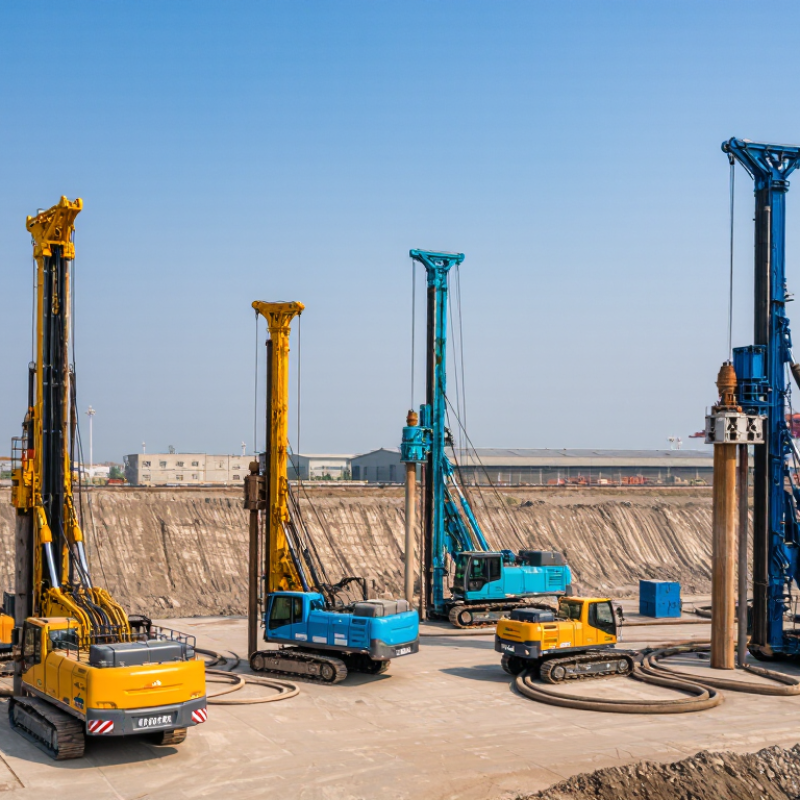
Hydraulic drill rigs use pressurized oil to operate the mast, feed system, rotation head, and stabilizers. An engine powers the hydraulic pump, while a bit cuts or fractures the ground. Depending on the method, air or fluid may carry cuttings out of the hole. Operators choose rotary, down-the-hole, or core drilling setups based on rock strength, hole size, and sampling needs. Hydraulic controls provide steady feed and torque, but they cannot make every formation easy. Fractured rock can still deflect a bit or slow progress.
These rigs serve mineral exploration, quarrying, foundation work, water wells, and geothermal projects. A compact crawler model can fit a confined work pad; larger rigs can drill production or blast holes across open ground. The USGS Mineral Commodity Summaries 2025 estimates world copper mine production at about 23 million metric tons in 2024. This is not a measure of rig demand, but it shows the scale of mineral extraction that drilling helps support. Crews check hose condition, hydraulic temperature, mast alignment, and flushing returns during each shift. Small leaks matter. Setup quality and geology can matter as much as rated drilling force. Even experienced crews misjudge conditions; careful drilling logs help improve the next hole.
How to Evaluate Hydraulic Drill Rig Manufacturers
A hydraulic drill rig should be judged against the rock, hole diameter, depth, and shift length it will actually face. Ask manufacturers for load charts, pump-flow and pressure readings, drilling logs, and service records from comparable sites. Then check whether the stated torque and feed force hold under continuous operation, not only during a showroom demonstration. Ask for proof.
Inspect the hydraulic circuit, hose routing, filtration, and access to wear parts. A technician should be able to reach routine service points without dismantling half the machine. Request a witnessed acceptance test and written tolerances for pressure, leakage, and vibration. The ISO Survey 2023 recorded 1,265,216 ISO 9001 certificates worldwide; that figure covers many sectors, so certification alone cannot verify rig performance. Review the manufacturer’s scope, inspection records, and corrective-action process. Call recent customers, and ask how quickly parts arrived after a breakdown. A polished brochure is tidy; a muddy shift is not. I would still want to see the rig working in similar ground, because test conditions rarely match every site.
How to Evaluate Hydraulic Drill Rig Manufacturers
How to use this chart: Score each manufacturer against these practical purchasing criteria, then apply the suggested weights to compare results. The criteria reflect common equipment-buying considerations; the percentages are an illustrative evaluation framework, not measured market data or a ranking of manufacturers.
Leading Hydraulic Drill Rig Manufacturers in China
Leading Hydraulic Drill Rig Manufacturers in China
China’s hydraulic drill rig manufacturers serve mining, quarrying, and infrastructure projects where uptime matters more than showroom claims. S&P Global Market Intelligence’s 2025 World Exploration Trends report estimated that global nonferrous exploration budgets reached US$12.5 billion in 2024, down 3% from 2023. That spending signals continued demand for dependable drilling equipment, but not a guarantee of easy sales.
Strong manufacturers typically demonstrate stable feed pressure, accessible hydraulic components, and documented performance across different rock conditions. Ask for test records showing penetration rate, fuel use, and maintenance intervals—not just maximum torque. A rig that drills steadily through fractured rock can be more useful than one with impressive specifications on paper. Check whether local technicians can diagnose leaks and replace hoses quickly. Small delays add up.
Experience is visible in the details. Look for clear parts lists, operator training, and service procedures that match real site conditions. Request customer references for comparable geology and working hours. Be cautious with broad claims: published performance figures may come from ideal conditions, and independent comparisons are not always available. That gap deserves scrutiny. A careful buyer should compare total operating cost, not only purchase price.
How Chinese Manufacturers Differ in Products and Expertise
Chinese hydraulic drill rig manufacturers differ less by location than by the ground and job their machines are built for. Some focus on crawler-mounted rigs for open-pit drilling, with high-output compressors and sturdy feed systems. Others prioritize compact rigs for quarry work, water wells, or geotechnical investigation. The International Energy Agency’s Coal 2023 report puts China’s coal production at about 4.5 billion tonnes in 2022, illustrating the scale of one major drilling market. But mining demand alone does not define a manufacturer’s expertise.
Compare rig type, drilling depth, hole diameter, and compatibility with different rock conditions. A powerful rig may suit a large open bench, yet be awkward on a narrow site. Look closely at the mast, dust-control setup, service access, and availability of wear parts. Ask for application-specific performance records, not just maximum specifications. Those figures can be difficult to compare fairly.
Tip: Match the rig to your ground and shift pattern. Request a duty-cycle example, then check how quickly routine parts can be replaced. A polished brochure is useful, but field details matter more.
What Buyers Should Consider When Choosing a Manufacturer
Choosing a hydraulic drill rig manufacturer starts with the worksite, not the brochure. Describe the ground conditions, target hole diameter, drilling depth, and daily operating hours. A rig suited to soft soil may struggle in fractured rock. Ask how the hydraulic system performs under sustained load, and request operating data for comparable conditions.
Check the details you can verify. Look for clear specifications on pump flow, working pressure, feed force, and mast height. Ask whether factory testing includes load checks, and request sample inspection records. Small things matter: hose routing, access to filters, and the space needed to service the power unit. They affect downtime. A polished specification sheet can still hide a mismatch.
Parts and technical support deserve equal attention. Ask which wear parts are kept in stock, how quickly common components can be shipped, and what training is provided for operators and maintenance staff. Speak with existing customers, ideally those drilling similar formations. Compare warranty terms in writing, including exclusions and response times. Price matters, but a low quote is less reassuring when service arrangements remain vague. Even a careful checklist can miss changing site conditions, so leave room to reassess the choice after a field trial.