Why Choose a Mini Submerged Pump for Your Needs?
Choosing the right pump can make routine water transfer safer, quieter, and less frustrating. A Mini Submerged Pump works while placed directly in water, so it can suit compact tanks, small fountains, aquariums, and shallow drainage tasks. Its small footprint may fit where a larger unit feels awkward. Less clutter. For many setups, that is a practical advantage.
Still, size alone should not decide the purchase. Check the required flow rate, lift height, water temperature, and whether the pump is designed for clean or debris-filled water. A pump that moves water easily across a short distance may struggle when pushing it higher through a narrow hose. Look at the product specifications, cable length, inlet design, and recommended operating conditions before installation. Keep the intake clear, and follow the manufacturer’s instructions for placement and maintenance.
A Mini Submerged Pump is not a universal solution. It may be unsuitable for deep wells, heavy solids, or continuous operation beyond its rated capacity. Real performance can also differ from headline figures once hoses, bends, and elevation are involved. That part is easy to overlook. Comparing the intended task with verified specifications helps set realistic expectations and reduces avoidable wear. This guide explains where these compact pumps perform well, what to check before buying, and when another pump type may be the better choice.
What Is a Mini Submersible Pump?
What Is a Mini Submersible Pump?
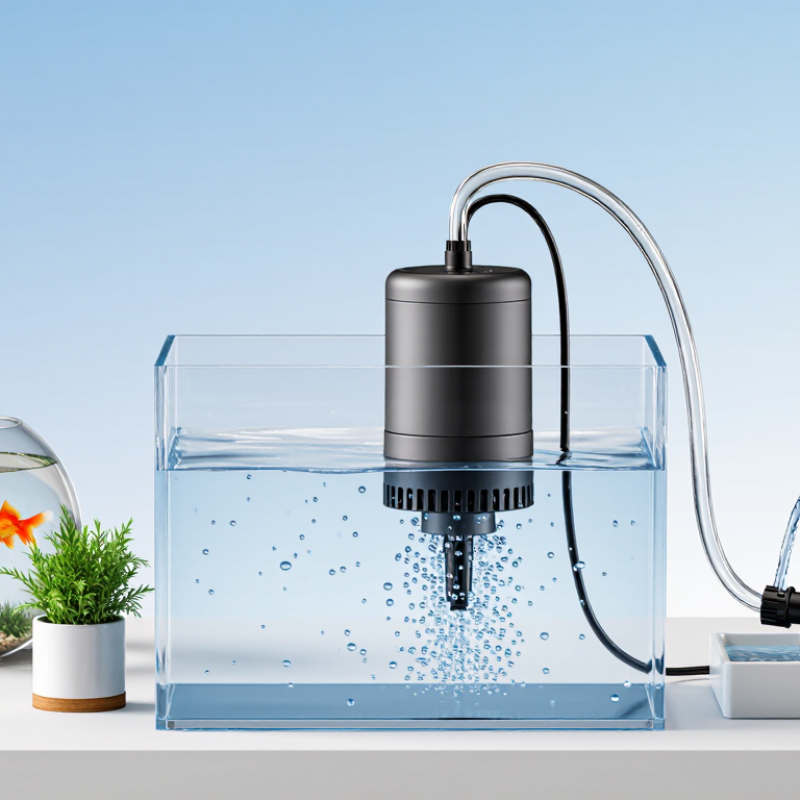
A mini submersible pump is a compact device designed to move water while sitting fully or partly underwater. Water enters through an intake near the base, then an impeller pushes it through an outlet connected to a small hose. Its motor is enclosed to help keep water away from electrical components.
Small, but useful.
These pumps can suit tabletop fountains, aquariums, and shallow water containers. Their size makes them easy to place in tight spaces, but capacity varies. A pump that works well in a small fountain may struggle to drain a larger basin or lift water through a tall hose.
Check the flow rate, maximum lift, power supply, and permitted water temperature before choosing one. Also note whether the intake can handle particles; many miniature models are meant for relatively clean water. A few leaves or grains of grit can clog a narrow opening. In practice, placement matters too: keep the intake clear and follow the manufacturer’s instructions. Not every setup behaves neatly, so test the pump with the actual hose and water level you plan to use.
How Does a Mini Submersible Pump Work?
Why Choose a Mini Submerged Pump for Your Needs?
How Does a Mini Submersible Pump Work?
A mini submersible pump moves water while sitting beneath its surface. Its sealed motor turns an impeller, a small rotating part that pushes water toward the outlet. As water leaves, more enters through the screened intake. The outlet hose then carries it to a drain or container. Small, but useful. Because the motor is underwater, the surrounding water helps cool it during operation. The sealed housing keeps water away from electrical components, but damaged seals can make a pump unsafe.
In real use, the process is not always that tidy. Debris can block the intake, and a kinked hose can slow the flow. A pump also needs enough water around it to operate as intended; running dry may cause overheating or damage. Check the pump’s rated lift and flow, since lifting water higher often reduces its flow rate. These details are easy to overlook.
Tips: Place the pump on a flat, stable surface, and keep its intake clear of grit. Check the power cord and housing before use. If flow drops, switch off power before inspecting the intake or hose. A small pump can handle routine draining, but it may struggle with thick sludge or large debris.
What Advantages Do Mini Submersible Pumps Offer?
Mini submersible pumps fit where larger equipment feels awkward: inside a narrow sump, a small tank, or a low corner holding rainwater. Because the pump sits underwater, it can avoid some suction-lift and priming problems associated with surface pumps. Its compact size also makes positioning and removal easier. That matters when access is limited.
Size alone does not guarantee efficiency. The U.S. Department of Energy and Hydraulic Institute report that pumping systems account for nearly 20% of global electricity demand, and 25–50% of energy use in some industrial operations. This broad industry figure is not specific to mini pumps, but it highlights why choosing the right capacity matters. Match the pump’s flow and lift to the job; an undersized unit may run too long, while an oversized one can waste energy.
Tips: Check the required lift, hose diameter, and water conditions before buying. Look for the rated flow at your actual lift, not just the maximum flow printed on a specification sheet. Keep the intake clear of leaves and grit. One practical caveat: small pumps may struggle with debris or continuous heavy-duty use, so verify the manufacturer’s operating limits.
Where Are Mini Submersible Pumps Commonly Used?
Mini submersible pumps are useful wherever water collects below the outlet level. In homes, they drain shallow flooded basements, window wells, utility pits, and dehumidifier reservoirs. Small spaces matter. Their sealed motor sits underwater, while a float switch can start pumping as water rises. In gardens, compact units circulate pond water, supply small fountains, or empty rain barrels. Aquariums and hydroponic systems also use low-flow models, but flow rate and materials must suit the water.
Workplaces use mini pumps to clear equipment sumps, condensate trays, and temporary water from maintenance areas. Some construction crews use them for small excavations, though muddy water can clog narrow intake screens. The U.S. EPA’s 2022 Clean Watersheds Needs Survey estimated $630.1 billion in documented wastewater and stormwater infrastructure needs over 20 years. That figure does not measure mini-pump use, but it highlights the scale of water-management needs. A compact pump is not a substitute for a properly sized drainage system.
Tips: Check maximum lift, flow at that lift, solids tolerance, and minimum water level. Keep the intake clear, test the float switch, and never run a pump dry. One overlooked detail: a low-cost unit may move water quickly in a bucket yet perform poorly through a long, narrow hose.
Why choose a mini submersible pump? Its compact, submerged design can suit confined spaces such as small sumps, ponds, aquariums, and water features. This chart shows the approximate freshwater pressure increase with depth—a useful consideration when selecting equipment for submerged use.
Pressure shown is gauge pressure, calculated as ρgh for freshwater (approximately 9.81 kPa per metre); actual conditions may vary.
How Do You Choose and Maintain the Right Mini Submersible Pump?
Choosing the right mini submersible pump starts with the job, not its size.
Check the required flow rate and vertical lift; a pump’s maximum flow usually drops as water rises. Measure from the water surface to the discharge point, then allow for hose length and bends. A narrow, kinked hose can slow drainage noticeably.
Match the pump’s intake to the water: fine screens suit clearer water, while larger passages handle small debris better. Never assume a compact pump can move leaves or sludge. Check its permitted water temperature, power supply, and continuous operating time. Unsure? Compare the manufacturer’s performance chart with your actual setup.
For maintenance, disconnect power before touching the pump.
Lift it by its handle or body, not by the cable. Rinse the intake after use, and remove grit that could restrict flow or wear the impeller. Inspect the cable, seals, and housing for cracks or damage; stop using the pump if anything looks unsafe. A small brush can clear stubborn residue. Keep the pump stored clean and dry when the manual allows it.
I would also test it briefly before a critical job, since a clean-looking intake does not prove the impeller is turning freely. Some wear is easy to miss. Follow the specific manual for service intervals and storage, because designs differ.