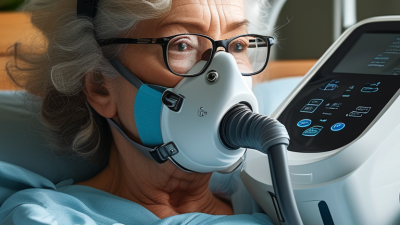



The 2026 portable ventilator market is entering a more demanding phase. Hospitals, emergency teams, transport providers, and home-care users need mobility without sacrificing dependable respiratory support. A Ventilator Portable must fit through narrow corridors, survive battery changes, and remain readable beside a noisy ambulance.
Industry forecasts indicate continued expansion. Grand View Research estimated the global mechanical ventilators market at approximately USD 4.9 billion in 2023, with further growth expected through the decade. MarketsandMarkets has also reported rising demand for portable and transport ventilators, driven by emergency preparedness, aging populations, and respiratory disease burdens. These figures are useful, but market estimates differ by product category and methodology. Buyers should check the original report dates.
Performance matters more than appearance. The World Health Organization’s technical guidance emphasizes oxygen control, alarms, monitoring, battery reliability, and appropriate clinical usability. Those details become real during a six-hour transfer, when a weak battery indicator can create serious pressure.
Dr. John J. Marini, a respected respiratory-care researcher, has stated, “Mechanical ventilation is a life-saving therapy, but it is not benign.” That warning should guide every purchasing decision. A smaller device is not automatically better. This guide compares 2026 models through practical criteria, including tidal-volume accuracy, ventilation modes, oxygen compatibility, noise, maintenance, training needs, and total ownership cost. Some specifications look impressive on paper. Field conditions may tell a different story. Global buyers should confirm local service coverage, approved configurations, and clinical suitability before procurement.
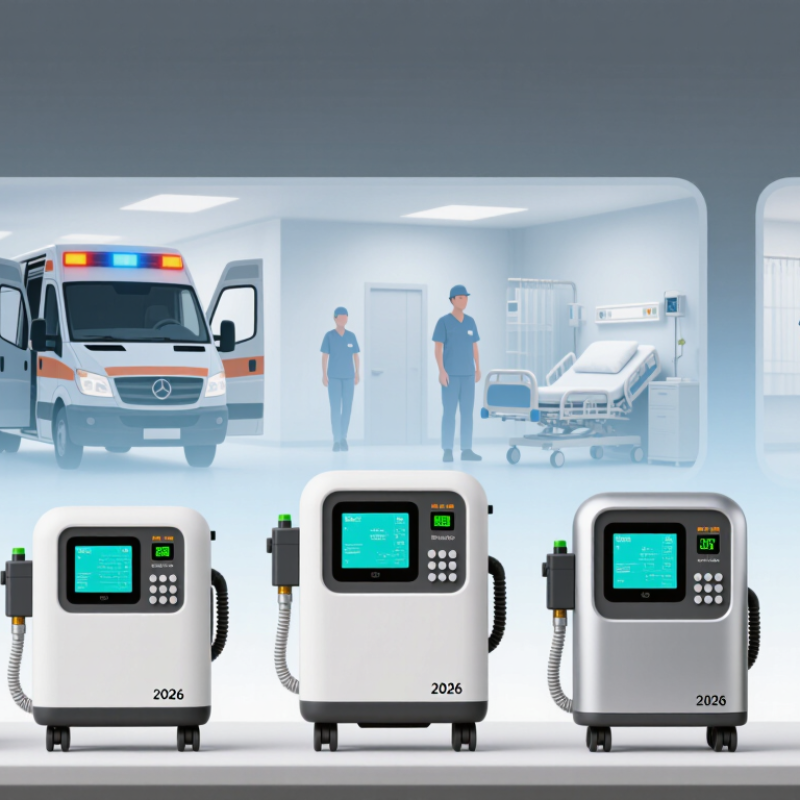
A portable ventilator is a compact medical device that supports breathing through positive pressure. It may deliver invasive or non-invasive ventilation, depending on the patient’s condition and clinical plan. Unlike an oxygen concentrator, it can assist or replace part of the breathing effort. That distinction matters.
In 2026, likely users include people with chronic respiratory failure, neuromuscular disorders, severe COPD, or recovery needs after critical illness. The World Health Organization reported that COPD caused about 3.5 million deaths worldwide in 2021, showing the scale of respiratory disease. The American Thoracic Society also recognizes home non-invasive ventilation for selected patients with chronic hypercapnic respiratory failure. However, diagnosis alone does not justify buying a ventilator. A respiratory specialist must determine the mode, pressure, mask interface, and monitoring schedule.
Global buyers should examine battery duration, alarm visibility, humidification, weight, and service access. A device that lasts six hours in a laboratory may perform differently during cold transport or heavy daily use. IEC 60601-1 safety compliance and local medical-device registration deserve careful checking. WHO’s Global Initiative for Chronic Obstructive Lung Disease materials also stress individualized assessment and follow-up. Not every oxygen user needs ventilation. That is an easy mistake. My practical concern is training: a family may understand the buttons but miss a blocked tube, weak battery, or changing patient condition. Reliability beats novelty. Procurement should include clinician training, replacement parts, emergency planning, and documented after-sales support.
Portable ventilators may be considered for patients who require assisted breathing during transport, at home, during sleep, or in step-down care. These global estimates show the scale of respiratory conditions associated with potential demand for respiratory support; they do not mean that every person with one of these conditions needs a ventilator.
Estimates: obstructive sleep apnea, approximately 936 million adults; asthma, approximately 262 million people; COPD, approximately 212.3 million people. Sources: Benjafield et al., The Lancet Respiratory Medicine, 2019; World Health Organization, 2024; GBD 2019 Respiratory Diseases Collaborators.
Choosing the best portable ventilator in 2026 depends on the patient’s breathing needs, not the smallest carrying case. Transport ventilators support patients moving between hospital departments, ambulances, or care facilities. They usually offer controlled breaths, pressure support, oxygen blending, and detailed alarms. These features require clinical training. A respiratory therapist should confirm settings before use.
Noninvasive ventilators suit many patients who breathe independently but need pressure assistance through a mask. They can help manage sleep-related breathing disorders or selected chronic conditions. A comfortable mask matters. So does humidification. Poor fitting may cause leaks, skin soreness, or ineffective therapy. Invasive ventilators serve patients with artificial airways and demand closer monitoring. They are not casual travel equipment.
Travel users may need a compact emergency or backup ventilator with long battery life, clear alarms, and an external power option. Check oxygen compatibility, charging standards, replacement filters, and service access before crossing borders. Airline approval is separate from medical suitability. Keep written prescriptions and a trained companion nearby. Never rely on battery estimates alone. Cold cabins, aging batteries, and extra accessories can reduce operating time.
The best choice can change. A device that worked during a home trial may feel unsuitable in a moving vehicle. That uncomfortable possibility deserves attention. Ask a qualified clinician to review ventilation targets, mask tolerance, emergency plans, and maintenance skills before purchase. Portable does not mean simple.
For global buyers, portable ventilators should be compared through measurable performance, not compact appearance. Check tidal volume accuracy, respiratory rate, pressure control, PEEP stability, and oxygen concentration across battery levels. The WHO Technical Specifications for Ventilators recommends clear monitoring of pressure, volume, oxygen delivery, and alarms. These functions matter during transport, unstable power, or dusty clinical environments.
Safety deserves equal attention. The WHO Global Patient Safety Action Plan reports that one in ten patients experiences harm in healthcare, and more than half of this harm is preventable. Choose devices with high-pressure, low-pressure, disconnection, apnea, battery, and oxygen alarms. Confirm alarm visibility from several meters away. IEC 60601-1 and ISO 80601-2-12 are useful reference standards, but certification alone does not prove easy operation. Local service capacity matters. A technically excellent ventilator becomes risky when staff cannot obtain filters or repairs.
Tips: Request independent test data, not only brochure claims. Test the unit with a lung simulator if possible. Observe performance at minimum and maximum settings. Ask how long the battery lasts under realistic ventilation, not standby mode. Review cleaning instructions with gloves and a timer. I would also test the screen under bright sunlight. This small detail is often missed. Regional training needs honest review, because a confusing interface can defeat strong engineering. WHO’s oxygen-system guidance also supports checking oxygen-source compatibility before purchase.
The table compares common portable ventilator categories using representative, non-brand specifications. Actual values vary by configuration, accessories, region, and intended patient population.
| Portable ventilator category | Typical clinical use | Tidal-volume capability | Pressure capability | PEEP range | Oxygen delivery | Typical battery operation | Typical device mass | Important safety and usability features | Best buying priority |
|---|---|---|---|---|---|---|---|---|---|
| Transport ventilator for adult and pediatric care | Ambulance transfer, inter-hospital transport, emergency departments, and short-term critical care | Approximately 20–2,000 mL, depending on patient circuit and configuration | Pressure-control and pressure-support operation commonly up to about 50–60 cmH₂O | About 0–20 cmH₂O | Compressed oxygen, oxygen concentrator, and room-air blending on many configurations | Commonly about 4–8 hours with an internal battery; external battery support may extend operation | Approximately 3–8 kg, excluding trolley and accessories | High and low airway-pressure alarms, apnea alarm, disconnection alarm, low-battery alarm, adjustable oxygen concentration, visual waveform display, and manual ventilation backup | Reliable operation during movement, rapid setup, alarm visibility, and compatibility with local oxygen infrastructure |
| Compact turbine-based critical-care ventilator | Field hospitals, intensive-care overflow, disaster response, and locations with limited compressed-gas supply | Approximately 20–2,000 mL on adult/pediatric platforms | Pressure-control, pressure-support, and volume-targeted modes; maximum pressure commonly about 50–60 cmH₂O | About 0–30 cmH₂O, depending on mode and model class | Room air generated by turbine; supplemental oxygen may be blended through a low- or high-pressure inlet | Often about 2–8 hours; battery duration depends strongly on turbine load, oxygen use, and display brightness | Approximately 4–10 kg | Continuous self-test, circuit-leak compensation, oxygen monitoring, pressure and volume alarms, expiratory-valve monitoring, and mains/battery changeover | Performance stability without a central gas pipeline, serviceability, filtration, and availability of replacement batteries |
| Non-invasive ventilation unit for adult patients | Acute or chronic respiratory failure managed with a mask rather than an invasive airway | Usually not specified as a primary volume range; some devices provide volume-targeted support within approximately 100–2,000 mL | Inspiratory pressure commonly up to about 25–40 cmH₂O | Approximately 3–25 cmH₂O | Room air with optional supplemental oxygen; oxygen blending accuracy varies by configuration | Usually about 2–8 hours when equipped with an internal or external battery | Approximately 1–5 kg | Leak compensation, apnea and low-minute-ventilation alarms, mask-off detection, adjustable rise time, ramp control, and humidifier compatibility | Patient comfort, leak management, humidification, noise level, and availability of correctly sized masks |
| Portable life-support ventilator for long-term home care | Long-term invasive or non-invasive ventilation for stable adults and children outside hospital | Commonly about 50–2,000 mL, with pediatric capability depending on circuit and accessories | Pressure-control and support modes commonly up to about 50 cmH₂O | Approximately 0–25 cmH₂O | Room air with optional low-flow oxygen; oxygen concentration may change with minute ventilation and leak | Often about 6–15 hours with internal and/or external batteries | Approximately 2–7 kg | Power-failure alarm, battery-status indication, circuit-disconnection alarm, internal memory, remote monitoring options, and easy-to-read controls | Battery autonomy, caregiver training, maintenance intervals, consumable availability, and local technical support |
| Emergency automatic resuscitator with mechanical ventilation | Basic emergency response, patient evacuation, and temporary ventilation by trained personnel | Often approximately 200–1,500 mL, with limited adjustment compared with critical-care units | Pressure-limited operation commonly around 20–60 cmH₂O, depending on configuration | Usually fixed or limited adjustment, commonly 0–20 cmH₂O | Compressed oxygen or oxygen-enriched gas; some units can operate with room air | Typically 4–12 hours, although some configurations rely primarily on compressed gas | Approximately 1–4 kg | Pressure-relief valve, high-pressure indication, low-pressure or disconnect alarm, simple controls, rugged housing, and rapid deployment | Simplicity, durability, oxygen-cylinder compatibility, cleaning procedure, and operator training requirements |
| Neonatal and pediatric transport ventilator | Transport of premature infants, neonates, and small children in specialist care systems | Approximately 2–300 mL, depending on the patient circuit and sensor technology | Pressure-control commonly up to about 40–60 cmH₂O | About 0–20 cmH₂O | Blended air and oxygen with precise oxygen adjustment on specialist configurations | Commonly about 3–8 hours | Approximately 2–7 kg | Sensitive flow measurement, leak compensation, apnea monitoring, oxygen monitoring, disconnect alarm, and neonatal circuit support | Low-flow accuracy, trigger sensitivity, humidification, sensor calibration, and specialist clinical support |
Performance ranges are representative category-level values for comparison and are not a substitute for the manufacturer’s technical documentation, clinical evaluation, or local regulatory approval.
Portable ventilators for global buyers must be judged beyond airflow and screen size. Power reliability is often the real constraint. A 2023 report from WHO, the World Bank, IRENA, and UNICEF estimated that up to one billion people rely on health facilities without dependable electricity. Buyers should request battery runtime at the intended settings, including humidification, alarms, and oxygen accessories. “Up to 12 hours” may change sharply in cold storage or heavy clinical use. Test it locally.
Transport also needs careful planning. Lithium batteries require correct watt-hour declarations, protective packaging, and airline approval under IATA Dangerous Goods Regulations. Spare batteries can create delays when documents are incomplete. Confirm charging voltage, plug standards, replacement parts, and service skills before shipment. A compact unit is not automatically easy to move.
Tips: Ask for IEC 60601-1 and IEC 60601-1-2 test evidence, plus applicable ISO 80601-2-12 documentation. Check destination registration, labeling language, importer duties, and post-market reporting rules. Request serial-level traceability and a written battery replacement schedule. Do not rely only on a supplier brochure. Independent verification is slower, but one overlooked alarm or connector can affect patient care. Some procurement teams still compare purchase price first; that habit deserves rethinking.
Choosing the best portable ventilator starts with local care conditions, not a global ranking. A respiratory clinician should assess patient needs, ventilation modes, alarm functions, and monitoring accuracy. Ask whether staff can manage the device during transport, night shifts, and emergency power loss. Do not rely on specifications alone.
Power reliability matters. Test the ventilator with local outlets, backup batteries, and voltage conditions. Battery duration should match real travel time, not only laboratory claims. Hot, humid environments may require stronger water management and easier cleaning. Dust can affect filters. Check replacement schedules and confirm that supplies are locally available. A device may be advanced, yet impractical without trained maintenance support.
Consider the care setting. A small clinic may need clear controls, durable housing, and simple alarm messages. A home-care program may value quiet operation and caregiver training. Language, electricity access, oxygen availability, and transport routes can change the safest choice. Review clinical evidence, regulatory documentation, service records, and user feedback from similar environments. Field testing should include a full shift with the intended team. One uncomfortable finding may appear: the preferred model is sometimes too complex for local staffing. That deserves honest discussion before purchase.