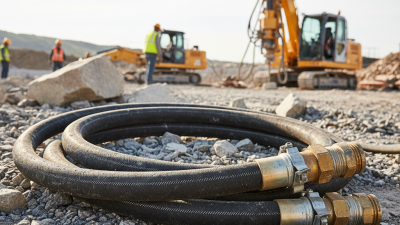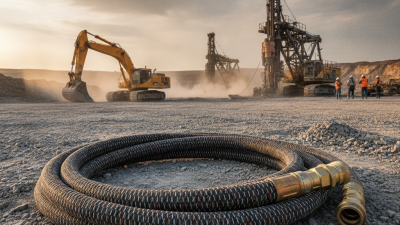

Choosing the right Rock Drill Air Hose in 2026 will demand more than comparing price lists. Global buyers must examine pressure ratings, bore size, abrasion resistance, temperature range, and coupling compatibility. A hose working beside a quarry face faces sharp stone, heavy vibration, dust, water, and repeated bending. Small specification errors can cause pressure loss, premature failure, or dangerous downtime.
Industrial hose engineer Elena Marquez explains, “A drilling hose must survive the worksite, not merely pass a factory pressure test.” Her observation captures an important buying reality. Rubber air hoses remain popular for demanding underground and surface drilling. Steel-wire-reinforced designs offer stronger pressure support. Thermoplastic options can reduce weight and simplify handling. Textile-reinforced hoses may suit lighter pneumatic tools, but their limits require careful review.
Performance comes first.
This guide introduces the leading Rock Drill Air Hose types available to international purchasers. It compares construction, flexibility, working pressure, safety factors, service life, and practical operating conditions. It also considers export packaging, documentation, replacement availability, and regional climate differences. A hose that performs well in a dry mine may behave differently in humid coastal storage. Cold weather can stiffen some compounds. Excessive heat can shorten service life.
No single hose fits every drilling system. That point is easy to forget. Buyers sometimes focus on burst pressure while overlooking bend radius, coupling quality, or operator handling. The better decision combines technical data with field experience, verified manufacturing practices, and realistic maintenance planning. Some recommendations may still require adjustment after site testing, because real rock, real dust, and real people are difficult to predict.
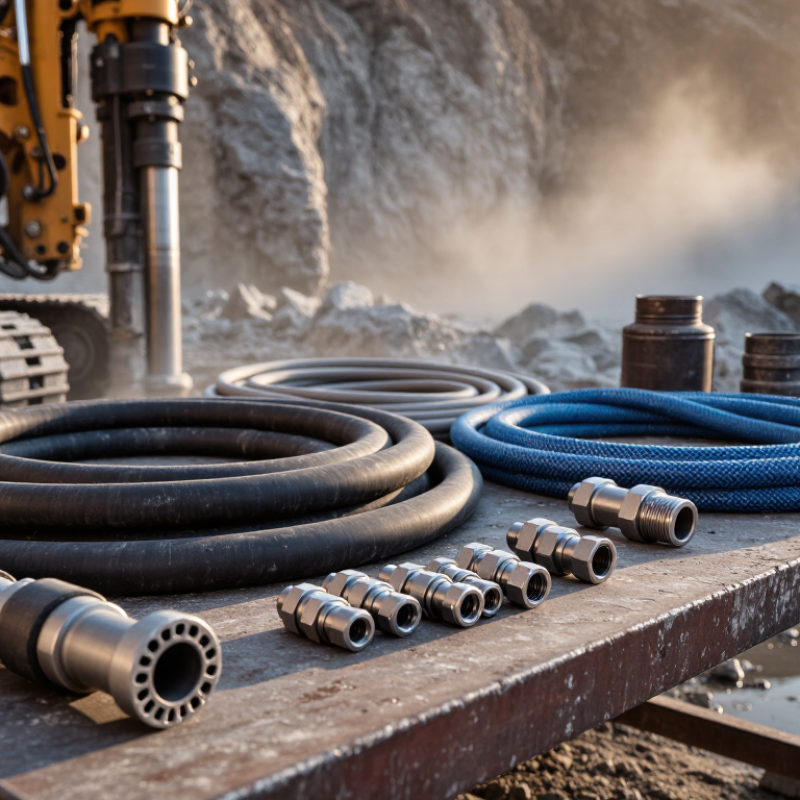
A rock drill air hose is a flexible pressure line that carries compressed air from a compressor to a pneumatic rock drill. It supports drilling in mines, tunnels, quarries, construction sites, and foundation projects. The hose must handle vibration, abrasion, moisture, and sudden pressure changes. It is not an ordinary workshop hose.
Most rock drill hoses use reinforced rubber or thermoplastic layers. Textile or steel reinforcement helps maintain strength under working pressure. A thick outer cover resists sharp stone, dragging, and contact with metal edges. The inner tube should tolerate compressed air, oil traces, and changing temperatures. In cold areas, stiffness becomes a practical problem. That detail is easy to overlook.
On a drilling site, technicians inspect the hose before each shift. They check cuts, exposed reinforcement, loose fittings, and flattened sections. A damaged coupling can whip violently when pressure escapes. Hose length also matters. Excess length creates loops around workers and equipment, while insufficient length pulls against the drill. Field experience shows that pressure ratings alone cannot define a suitable hose. Routing, bending radius, connection quality, and cleaning habits affect service life. Some buyers focus only on maximum pressure. That assumption is often wrong. A reliable selection matches the hose to the drill’s air demand, site conditions, and daily handling routine.
In 2026, rock drill air hoses are available in several practical constructions. Rubber air hoses remain common for mining and quarry work. They handle vibration, oil contact, and rough ground better than many lightweight alternatives. Textile-reinforced hoses offer easier handling and lower transport weight. They suit shorter drilling lines and controlled jobsite conditions.
Steel-wire-reinforced hoses provide higher pressure resistance for demanding pneumatic drilling systems. Their stronger walls reduce expansion, but they are heavier and less flexible. Thermoplastic polyurethane hoses resist abrasion and remain flexible in colder areas. Hybrid polymer hoses can reduce weight while maintaining useful pressure performance. Not every “heavy-duty” hose performs equally.
Internal diameter affects airflow and drill efficiency. A narrow hose may create pressure loss over long distances. Buyers should check working pressure, burst pressure, temperature range, bend radius, and coupling compatibility. Anti-static or flame-resistant constructions may be necessary in specific industrial environments. Confirm these claims through technical datasheets and test records. Field inspections often reveal small cuts before failure occurs. That habit matters.
Hose length also deserves attention. Excess length adds weight, friction, and trip hazards. Shorter runs usually deliver steadier airflow, although layouts are rarely perfect. I have seen suitable hoses fail after poor storage, sharp bends, or dragging across metal edges. A reliable specification should match the drill, compressor, climate, and maintenance routine. The cheapest type is not always the lowest-cost choice.
| Rock Drill Air Hose Type | Typical Construction | Common Inside Diameters | Typical Working Pressure | Typical Temperature Range | Main Advantages | Typical Rock-Drilling Uses | Important Buying Considerations |
|---|---|---|---|---|---|---|---|
| Textile-Reinforced Rubber Air Hose | Oil-resistant synthetic rubber tube and cover with one or more textile reinforcement layers. | 13–51 mm (1/2–2 in) |
10–20 bar (145–290 psi) |
Approximately −30°C to +80°C | Flexible, economical, easy to handle, and suitable for general compressed-air service. | Hand-held pneumatic rock drills, jackhammers, quarry tools, and underground maintenance work. | Check abrasion resistance, kink resistance, coupling compatibility, and whether the pressure rating is continuous or peak service. |
| Wire-Reinforced Rubber Air Hose | Synthetic rubber tube and cover reinforced with one or more high-tensile steel-wire braids or spirals. | 19–51 mm (3/4–2 in) |
20–40 bar (290–580 psi) |
Approximately −40°C to +100°C | Higher pressure capability, strong resistance to pressure surges, and good crush resistance. | Large pneumatic drills, long air lines, heavy quarry equipment, and demanding surface or underground applications. | Confirm minimum bend radius, hose weight, electrical conductivity requirements, and end-fitting crimp specifications. |
| Multi-Spiral Steel-Reinforced Air Hose | Heavy-duty rubber hose incorporating multiple spiral steel-wire reinforcement layers. | 25–51 mm (1–2 in) |
35–70 bar (510–1,015 psi) |
Approximately −40°C to +100°C | Very high pressure resistance, excellent impulse performance, and robust service life in severe conditions. | High-output drilling systems, large pneumatic rock drills, compressor discharge lines, and rugged mining environments. | Use only with correctly matched fittings; assess weight, routing space, pressure spikes, and periodic inspection requirements. |
| Thermoplastic Polyurethane (TPU) Air Hose | Polyurethane tube with textile, aramid, or equivalent reinforcement and a polyurethane outer cover. | 6–25 mm (1/4–1 in) |
10–25 bar (145–365 psi) |
Approximately −40°C to +80°C | Low weight, strong abrasion resistance, good flexibility, and easy handling around mobile equipment. | Portable drilling tools, narrow tunnel headings, workshop connections, and applications requiring frequent movement. | Verify resistance to oil, ultraviolet exposure, sparks, hot surfaces, and the pressure reduction that may occur at low temperatures. |
| PVC or PVC-Nitrile Air Hose | Flexible PVC or PVC-nitrile compound with textile reinforcement and an abrasion-resistant outer layer. | 13–51 mm (1/2–2 in) |
8–20 bar (116–290 psi) |
Approximately −20°C to +60°C | Cost-effective, relatively light, resistant to many common chemicals, and available in bright safety colors. | General quarry air distribution, light-duty pneumatic tools, temporary lines, and above-ground service. | Less suitable for severe impact, very low temperatures, high heat, or repeated high-pressure surges than reinforced rubber designs. |
| Hybrid Polymer Air Hose | Flexible polymer blend, commonly combining polyurethane, nitrile, and PVC characteristics with textile reinforcement. | 10–25 mm (3/8–1 in) |
10–20 bar (145–290 psi) |
Approximately −30°C to +70°C | Good flexibility, lower weight than many rubber hoses, reduced memory, and convenient handling in changing weather. | Mobile drill rigs, maintenance tools, surface construction, and applications involving frequent coiling and uncoiling. | Review the manufacturer’s abrasion, oil, ozone, and cold-flexibility data before selecting it for underground mining. |
| Anti-Static or Electrically Conductive Air Hose | Rubber or polymer hose formulated with conductive materials or an embedded conductive path to dissipate static charge. | 13–51 mm (1/2–2 in) |
10–40 bar (145–580 psi) |
Approximately −40°C to +80°C | Helps control electrostatic charge where combustible dust, gases, or sensitive equipment create additional risk. | Underground mines, enclosed tunnels, dusty processing areas, and sites with documented static-control procedures. | Request the specified electrical-resistance value, test method, grounding procedure, and local mine-safety approval requirements. |
| Flame-Resistant Mining Air Hose | Specially compounded rubber or polymer cover designed to reduce flame propagation, usually with textile or wire reinforcement. | 19–51 mm (3/4–2 in) |
20–40 bar (290–580 psi) |
Approximately −40°C to +80°C | Improved fire performance and abrasion protection for demanding mining and tunneling environments. | Underground pneumatic drilling, longwall support areas, tunnel construction, and applications near potential ignition sources. | Do not assume compliance from the product description; verify the exact flame, smoke, electrical, and mining certifications required at the destination. |
| Heat-Resistant Compressed-Air Hose | Heat-stabilized rubber or specialized polymer tube and cover with textile or wire reinforcement. | 13–51 mm (1/2–2 in) |
10–30 bar (145–435 psi) |
Approximately −40°C to +135°C | Maintains flexibility and pressure performance near hot compressors, engines, and exposed rock surfaces. | Compressor outlets, hot-work zones, surface drilling, and applications with elevated ambient or conveyed-air temperatures. | Measure actual air temperature, account for pressure derating at high temperature, and keep the hose away from direct flame and exhaust contact. |
For rock drills, hose material controls flexibility, abrasion resistance, and chemical tolerance. Nitrile rubber suits air lines exposed to compressor oil. EPDM handles weather and moisture better, but petroleum oils can damage it. PVC is light and economical. It may stiffen sharply in cold mines. That detail matters during winter shifts.
Reinforcement carries the pressure load. Textile layers keep the hose flexible and relatively light. Multiple steel-wire layers offer stronger pressure and crush resistance, but increase weight and bending fatigue. ISO 2398:2006 classifies compressed-air hoses around 10, 15, and 25 bar working pressures. Buyers should compare these values with the drill maker’s operating pressure, not only the burst rating. A larger internal diameter can also reduce pressure loss across long runs. Small fittings often undo that advantage.
Field checks reveal an imperfect truth: the strongest hose is not always the safest choice. It can be difficult to handle. A practical selection balances pressure, bend radius, temperature, and operator fatigue. NIOSH’s occupational noise criteria use 85 dBA over an eight-hour exposure as a recommended limit. Hose construction does not solve drill noise, but leaks can add harsh hissing and waste compressor energy. Inspect covers for cuts, exposed reinforcement, and flattened sections. Replace damaged assemblies early. Some sites still wait for visible failure. That habit deserves reconsideration.
2026 Top Rock Drill Air Hose Types for Global Buyers
Matching an air hose to a rock drill starts with airflow, not appearance. Check the drill’s required cubic feet per minute and the compressor’s actual output. A hose with a small inside diameter can starve the drill, even when its pressure rating looks impressive. For many handheld drilling jobs, a 3/4-inch or 1-inch internal diameter may be suitable, but the equipment manual should decide.
Pressure needs careful checking. Select a hose with a working pressure above the compressor’s maximum operating pressure, including startup surges. Do not confuse burst pressure with working pressure. That mistake can become expensive. In quarry areas, I prefer abrasion-resistant covers and flexible construction because hoses drag across sharp stone. Heat, water, oil, and cold climates also affect service life.
Couplings must match the hose size, thread standard, sealing method, and drill inlet. A mismatched coupling may leak or loosen under vibration. Locking couplings, whip checks, and proper clamps add practical protection. Inspect the connection before every shift. Look for crushed sections, exposed reinforcement, and damaged seals. My early procurement sheets focused too heavily on hose length. Later, field wear showed that routing and coupling quality mattered just as much. Global buyers should also confirm local fitting availability, since an unusual coupling can delay repairs when production depends on one replacement hose.
Recommended hose inside diameter by pneumatic rock-drill air demand. The ranges reflect common compressed-air drilling practice; final selection should be verified against drill specifications, hose length, ambient temperature, and pressure-loss requirements.
Coupling selection should match the hose bore and drill inlet. Industrial interchange quick couplings are convenient for frequent tool changes, while claw couplings are common for larger compressed-air lines. Use safety clips, whip checks, and a coupling working-pressure rating equal to or greater than the hose assembly rating.
Rock drilling demands hoses that tolerate pressure, vibration, abrasion, and sudden movement. Common options include rubber, hybrid, and thermoplastic air hoses. Rubber usually handles harsh ground conditions well. Hybrid hoses can reduce weight during repeated handling. Thermoplastic designs may offer smooth airflow and easier cleaning. Selection should match the drill’s working pressure, temperature range, coupling system, and site conditions. Never choose by diameter alone.
Tips: Inspect the hose before every shift. Look for cuts, exposed reinforcement, blisters, crushed sections, and damaged couplings. Confirm that the rated pressure exceeds the tool’s operating pressure. Secure connections with suitable safety clips or whip checks. Keep the hose away from sharp rock edges and hot exhaust surfaces. Drain compressor moisture regularly. Water inside the line can accelerate corrosion and reduce tool performance.
Coil hoses loosely after use, without tight bends or heavy stacking. Store them in a cool, shaded area away from oils, chemicals, and direct sunlight. Replace damaged hoses instead of relying on temporary repairs. That shortcut can fail without warning. No checklist is perfect. Crews may still overlook small surface cracks during busy shifts. A second-person inspection helps catch these details. Maintenance records should note inspection dates, pressure issues, coupling changes, and replacement reasons. These simple records reveal recurring problems and support safer purchasing decisions.