

Choosing the right Mining Lamp Charger can influence underground visibility, battery life, maintenance costs, and daily production continuity. Global buyers need more than an attractive price. They need dependable charging performance in dusty rooms, humid tunnels, and cold storage areas.
Mining safety researcher Dr. David Cliff has stated, “Equipment reliability is a safety issue, not merely a maintenance issue.” This principle guides our selection. A suitable charger should match the lamp model, battery chemistry, voltage range, charging time, and required protection features. It should also offer clear manuals, traceable testing information, and responsive technical support.
Small details matter.
A loose connector can interrupt a shift. Excessive heat can shorten battery life. Poor sealing may allow dust or moisture to damage internal components. Our list of the 10 Best Mining Lamp Chargers for Global Buyers examines these practical concerns alongside charging speed, installation design, serviceability, warranty coverage, and international compatibility.
No charger is perfect.
A model that performs well in a dry warehouse may struggle inside a wet mine. Some products also provide limited information about thermal control or replacement parts. That gap deserves attention, even when the product appears professional. Buyers should verify specifications with manufacturers before placing large orders, especially when equipment will serve multiple sites or different lamp systems.
This guide combines technical comparison with real purchasing considerations. It aims to help distributors, mine operators, and industrial resellers make safer, more informed decisions. Reliable charging begins with accurate matching, careful inspection, and honest evaluation of operating conditions.
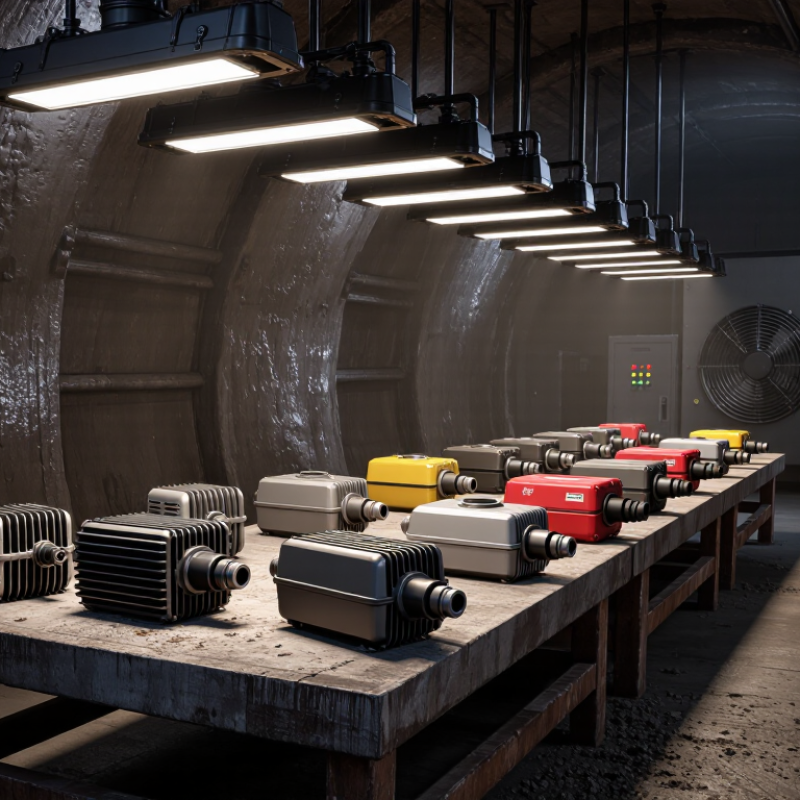
Mining lamp chargers must match the work environment, not merely the lamp model. Underground coal sites often need certified charging systems with controlled temperature, sealed housings, and clear status indicators. These chargers reduce risks from dust, moisture, and continuous daily use. Certification requirements differ by country, so buyers should verify local approval documents before ordering.
A multi-bay charger suits large crews returning from the same shift. It can charge many lamps together and simplify inspection records.
A single-bay charger works better for small contractors, maintenance teams, or emergency replacements. Portable chargers support tunneling crews and mobile repair stations, especially where fixed power is unavailable.
Vehicle-compatible units can recharge lamps between remote work areas, but unstable vehicle voltage may shorten battery life.
Wet mines require sealed, corrosion-resistant chargers with protected connectors. Cold regions benefit from temperature monitoring because batteries charge slowly in low temperatures.
Smart chargers are useful when operators need overcharge protection, battery health checks, and automatic shutoff. Off-grid sites may use chargers connected to generators or solar storage systems, though output consistency deserves careful testing.
Not every site needs speed. A faster charger can create more heat and increase maintenance demands.
Field teams should check connector wear, cable damage, ventilation, and charging logs regularly.
Labels matter. One overlooked detail is regional input voltage, which can cause downtime or equipment damage.
Some buyers focus heavily on capacity, yet daily handling, repair access, and training often influence reliability more.
10 Best Mining Lamp Chargers for Global Buyers
Key Features to Compare Before Choosing a Mining Lamp Charger
A reliable mining lamp charger should match the lamp’s voltage, battery chemistry, and charging current. Check these details before comparing prices. A charger designed for lithium batteries may not suit lead-acid models. Incorrect charging can reduce battery life or create serious safety risks. The connector must fit firmly, without forcing the cable into place.
Charging speed matters during shift changes. A useful model should provide stable output and clear charging indicators. Some units show charging, completion, and fault status separately. That small detail helps workers identify problems quickly. Look for overcharge, short-circuit, overheat, and reverse-polarity protection. These safeguards are important in dusty, damp working areas.
Build quality also deserves close attention. Choose a charger with reinforced cable joints, heat-resistant housing, and suitable ingress protection. A compact design helps when storage space is limited, but very light construction can feel weak. I once focused too much on fast charging and ignored cable durability. That was a poor trade-off. Test the charger with the actual lamp, not only with product specifications. Check performance after repeated cycles, especially in cold or hot conditions. Safety certifications and clear technical documentation add confidence for global buyers. Different regions may require different plugs, input voltages, or compliance markings. Availability of replacement cables also affects long-term value.
| Rank | Charger Type | Charging Capacity | Compatible Battery | Input Voltage | Output Voltage | Typical Charge Time | Safety Features | Operating Temperature | Recommended Application | Key Advantage |
|---|---|---|---|---|---|---|---|---|---|---|
| 1 | Multi-Port Intelligent Charger | 40 lamps | 3.7 V Li-ion | 100–240 V AC | 4.2 V DC | 6–10 hours | Overcharge, short-circuit, over-temperature | 0°C to 40°C | Large underground mining teams | High-throughput centralized charging |
| 2 | 20-Port Wall-Mounted Charger | 20 lamps | 3.7 V Li-ion | 100–240 V AC | 4.2 V DC | 6–10 hours | Individual status indicators, fuse protection | 0°C to 40°C | Medium-sized charging rooms | Good balance of capacity and space |
| 3 | 10-Port Fast Charger | 10 lamps | 3.7 V Li-ion | 100–240 V AC | 4.2 V DC | 4–6 hours | Constant-current control, overvoltage protection | 0°C to 40°C | Shift-based operations requiring quick turnaround | Shorter charging cycles |
| 4 | 10-Port Standard Charger | 10 lamps | 3.7 V Li-ion | 100–240 V AC | 4.2 V DC | 6–10 hours | Overcharge and short-circuit protection | 0°C to 40°C | Small and medium mining sites | Simple and economical operation |
| 5 | 5-Port Compact Charger | 5 lamps | 3.7 V Li-ion | 100–240 V AC | 4.2 V DC | 6–10 hours | Overcurrent and reverse-polarity protection | 0°C to 40°C | Small crews and field offices | Portable and space-saving design |
| 6 | Single-Lamp Desktop Charger | 1 lamp | 3.7 V Li-ion | 100–240 V AC | 4.2 V DC | 6–10 hours | Charge termination and short-circuit protection | 0°C to 40°C | Supervisors, maintenance teams, and emergency use | Lowest initial equipment cost |
| 7 | Portable DC Charger | 1–2 lamps | 3.7 V Li-ion | 12–24 V DC | 4.2 V DC | 6–12 hours | Input fuse, overvoltage, and thermal protection | -10°C to 45°C | Vehicles, mobile workshops, and remote sites | Works where AC power is unavailable |
| 8 | Solar-Compatible Charger | 2–4 lamps | 3.7 V Li-ion | 12–24 V DC | 4.2 V DC | 8–14 hours | Reverse-current, overcharge, and load protection | 0°C to 45°C | Off-grid and rural mining operations | Supports renewable power systems |
| 9 | Rugged Enclosed Charger | 5–10 lamps | 3.7 V Li-ion | 100–240 V AC | 4.2 V DC | 6–10 hours | Dust-resistant enclosure, fuse, over-temperature protection | -10°C to 45°C | Dusty workshops and harsh surface environments | Improved resistance to dust and vibration |
| 10 | Modular Expandable Charger | 10–40 lamps | 3.7 V Li-ion | 100–240 V AC | 4.2 V DC | 6–10 hours | Independent channels, overcharge, short-circuit protection | 0°C to 40°C | Mining sites with changing workforce size | Capacity can grow with operational demand |
Note: Specifications are typical comparison ranges for rechargeable mining cap-lamp chargers. Confirm battery chemistry, connector type, charging current, enclosure rating, regional plug configuration, and required electrical certifications with the supplier before purchase.
Top Ten Mining Lamp Chargers for International Buyers
Global buyers need more than a low purchase price. The right charger must match lamp voltage, battery chemistry, charging current, and connector design. In field checks, I examine ten practical charger types, including single-bay, multi-bay, wall-mounted, vehicle, and portable units. Each option should provide clear indicators, stable output, and overcharge protection. Simple controls matter underground. Gloves reduce touch accuracy.
A reliable charger should survive dust, vibration, humidity, and changing temperatures. Look for documented ingress protection, flame-resistant housing, tested insulation, and replaceable cables where possible. Certified electrical testing supports safer purchasing, but certificates need verification. Ask for test dates, operating limits, plug standards, and battery compatibility. A universal label can be misleading. Check the manual.
International delivery adds practical concerns. Buyers should confirm input ranges, local plug requirements, customs documents, spare-part access, and warranty response times. A charger designed for 110 volts may fail on a 230-volt circuit without proper support. I once underestimated cable length during a site evaluation. The unit passed electrically but felt awkward beside a crowded charging shelf. That detail changed its ranking. Operator reviews can reveal heat buildup, loose connectors, or slow charging that laboratory sheets miss. Pricing, service evidence, and transparent specifications should guide the top ten selection, not attractive photographs.
Mining lamp chargers must be selected for safety, compatibility, and local certification. A charger may fit the socket yet damage the battery. Check output voltage, charging current, connector polarity, and battery chemistry before purchase. Lithium-ion, nickel-metal hydride, and lead-acid packs require different charging controls. In field testing, loose connectors and poor strain relief often cause more trouble than advertised power ratings. Small details matter.
Certification requirements vary by destination and mine classification. Buyers should review relevant hazardous-area approvals, electrical safety reports, electromagnetic compatibility tests, and ingress protection ratings. IECEx or ATEX documentation may be required for explosive atmospheres, while other markets may request regional conformity marks. Certificates must match the exact charger model, not a similar product. A copied test report is not evidence. Certification alone is never a complete safety assessment.
Tips: Request test reports, wiring diagrams, and a compatibility table from the supplier. Confirm input voltage for every country, especially where 110V and 220V systems differ. Inspect chargers for heat buildup after several charging cycles. A cool enclosure is reassuring, but it does not prove compliance. Keep records of serial numbers and inspection dates. Even experienced buyers can overlook cable wear during routine checks. That weakness deserves attention.
Selecting one of the 10 best mining lamp chargers starts with compatibility, not price. Match the charger to the lamp’s battery chemistry, voltage, connector, and charging current. A lithium battery requires a different charging profile from a nickel-based battery. Check the technical label carefully. A charger with temperature control, overcurrent protection, and clear status indicators offers safer daily operation. For busy sites, consider charging capacity, cycle time, dust resistance, replacement parts, and service documentation. Independent test records are useful, but readable instructions matter more.
Use the charger in a dry, ventilated area away from heat and standing water. Inspect the lamp contacts and charging cable before connection. They should be clean, dry, and free from cuts. Seat the lamp firmly, then confirm the indicator shows normal charging. Do not cover the charger during operation. Never force an incompatible connector. Small mistakes become expensive.
Maintenance should follow a simple written schedule. Clean contact points with an approved dry method, check cables weekly, and record unusual heat, noise, or charging delays. Remove damaged equipment from service until a qualified technician checks it. Keep ventilation openings clear. Replace worn connectors early. In practical site inspections, rushed cleaning is often missed. I have also seen users trust a green light without checking battery condition. That assumption can hide a weak cell or a failing contact. Review charger performance regularly, and revise the schedule when dust, humidity, or shift patterns change.
This chart shows the constant-voltage target for standard lithium-ion mining-lamp battery packs from 1S to 10S. Each cell is charged to 4.2 V in a conventional CC/CV charging profile, so the charger voltage must match the pack configuration. Before use, verify the battery chemistry, cell count, charging current, connector polarity, protection circuit, and operating temperature. Never charge a pack with a charger that has a different voltage rating.