

• Longtop Mining, Professional Mining Equipment Supplier
  • Longtop Mining, Professional Mining Equipment Supplier
  • Longtop Mining, Professional Mining Equipment Supplier

Why Choose Pneumatic Equipment for Industrial Applications?

Why Choose Pneumatic Equipment for Industrial Applications?

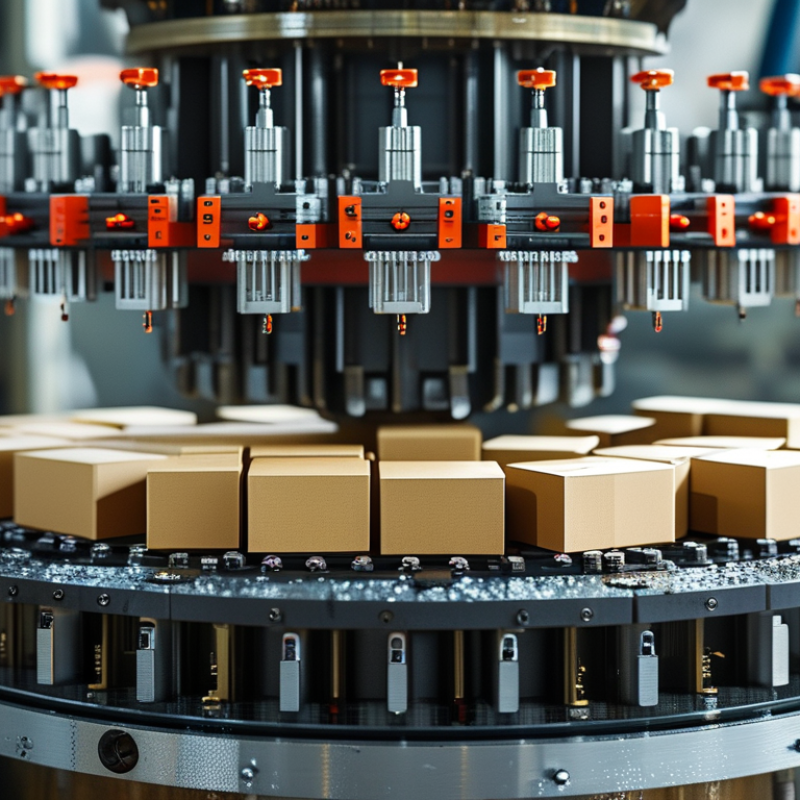
Pneumatic Equipment remains a practical choice for factories that value speed, cleanliness, and dependable motion. It uses compressed air to power cylinders, grippers, valves, and other production tools. In a packaging line, for example, a pneumatic actuator can move a carton quickly, repeatably, and with limited mechanical complexity.

Peter Nachtwey, a recognized motion-control engineer, has observed, “Pneumatic systems are simple, but they are not always easy to control.” This comment captures an important engineering reality. Pneumatic devices are often easy to install, yet their performance depends on air quality, pressure stability, tubing length, and correct sizing. A poorly selected cylinder may waste energy or produce inconsistent movement. Small details matter.

Pneumatics also offers strong advantages in wet, dusty, or electrically sensitive environments. Air-powered equipment can tolerate frequent cycling and sudden stops without relying on complex electric motors at every point. Maintenance teams can often inspect leaks, filters, regulators, and lubricators using familiar procedures. The system feels straightforward.

But it is not perfect.

Compressed-air generation can consume substantial energy, especially when leaks remain unnoticed. Noise may also require attention near operators. These limitations should appear in any honest equipment assessment. Choosing Pneumatic Equipment should involve a measured comparison of duty cycle, force, speed, safety needs, maintenance skills, and total operating cost. When engineers treat those factors seriously, pneumatic technology can provide clean, responsive, and durable automation for many industrial applications.
Why Choose Pneumatic Equipment for Industrial Applications?

What Is Pneumatic Equipment and How Does It Work?

Why Choose Pneumatic Equipment for Industrial Applications?

What Is Pneumatic Equipment and How Does It Work?

Pneumatic equipment uses compressed air to create controlled mechanical movement. A compressor draws in atmospheric air and raises its pressure. Filters remove particles and moisture before the air reaches valves and actuators. Valves then direct airflow through hoses or pipes. Cylinders convert that airflow into linear force. Rotary actuators produce turning motion.

This system suits factories needing fast, repeatable movements. It can clamp, lift, sort, push, and position materials. The U.S. Department of Energy reports that compressed air may represent about 10% of industrial electricity use. Its compressed-air sourcebook also notes that leaks can waste 20–30% of compressor output. That sounds manageable, but a small leak can hiss continuously beside a production line. Pneumatic equipment is not automatically efficient. Poor pressure settings and wet air create hidden costs. The calculation is rarely perfect without regular measurement.

Tips: Check leaks with ultrasonic equipment, not only by listening. Set pressure near the actual process requirement. Drain moisture separators routinely. Replace damaged tubing quickly. The European Commission also recommends improving compressed-air system controls and reducing unnecessary demand. A simple pressure gauge can reveal more than assumptions. Sometimes, the best improvement is using less air.

Which Industrial Tasks Are Best Suited to Pneumatic Systems?

Which Industrial Tasks Are Best Suited to Pneumatic Systems?

Pneumatic systems suit industrial tasks requiring fast, repeated, and controlled movement. They handle clamping, pressing, lifting, ejecting, and pick-and-place operations effectively. Short-stroke cylinders can move parts within milliseconds. Air grippers also manage fragile components without heavy mechanical assemblies. They perform well around water, dust, and frequent washdowns. This makes them useful in packaging, assembly, food processing, and material handling.

The best applications usually need simple force control rather than extreme positioning accuracy. Pneumatics work especially well for repetitive end-of-line tasks, such as carton forming, product sorting, and component insertion.

However, the choice is not automatically efficient. The U.S. Department of Energy reports that compressed air can represent about 10% of industrial electricity use. Its sourcebook also states that leaks may waste 20–30% of compressed air production. That hidden cost deserves attention.

Pneumatics are not perfect. Their air compressibility can reduce precision during delicate motion. Poorly sized valves, wet air, and sudden pressure changes can create inconsistent results. Engineers should examine cycle frequency, force requirements, noise, and maintenance access before installation. The Compressed Air and Gas Institute recommends controlling pressure, filtration, and leakage as part of system management. A practical audit should include listening for leaks near night-shift equipment. Small weaknesses often become expensive habits.

What Are the Main Benefits of Using Pneumatic Equipment?

In industrial workshops, pneumatic equipment converts compressed air into controlled motion. Its main advantage is practical resilience. Cylinders and air motors can operate near dust, moisture, and frequent washdowns when properly protected. Pneumatic actuators do not create electrical arcs during normal motion. This matters in carefully controlled environments. Operators often notice fast cycling, simple controls, and cooler operation around the machine. A jammed actuator may stop without burning out immediately. That response can reduce damage during unexpected resistance. But protection still matters.

Pneumatic systems are also easy to configure. Tubing can reach separate workstations, while valves regulate speed and force. Maintenance teams can inspect filters, regulators, fittings, and hoses without dismantling the entire line. Replacement parts are usually straightforward to identify. In field maintenance, a small pressure gauge often reveals problems earlier than a production report. A slow cylinder may indicate a leaking fitting, blocked filter, or worn seal. These clues support safer, more predictable troubleshooting. It is not always effortless.

The energy story requires honesty. Compressed air can be expensive because compressors lose energy as heat and noise. Leaks quietly raise operating costs. Poor drainage can send water into valves, causing erratic motion. Engineers should size the compressor, control pressure drops, and test leakage regularly. With those controls, pneumatic equipment offers rapid movement, overload tolerance, and flexible automation for packaging, assembly, and material handling. Its performance depends on disciplined design, not air pressure alone.

How Do Pneumatic Systems Compare with Electric and Hydraulic Options?

Why Choose Pneumatic Equipment for Industrial Applications?

Pneumatic systems compete with electric and hydraulic equipment in a practical way: speed, cleanliness, and overload tolerance. Air cylinders stop safely when resistance rises. Electric actuators can deliver precise positioning, while hydraulic systems usually provide greater force in compact spaces. The choice depends on duty cycle, control accuracy, and the surrounding environment.

The U.S. Department of Energy reports that compressed-air leaks can waste 20–30% of compressor output. That figure changes the comparison. Pneumatics may look simple, but poor maintenance can make them expensive. A factory using a 7-bar network should inspect hoses, fittings, and drains regularly. Ultrasonic leak testing can reveal a faint hiss near a valve block. Electric systems often waste less energy during intermittent motion, especially when drives recover or reduce speed. They also support detailed feedback and programmable positioning.

Hydraulics remain strong where heavy loads and high power density matter. However, fluid leaks can contaminate floors and require careful containment. Pneumatic equipment avoids oil reservoirs and often works well in dusty, wet, or washdown areas. The International Energy Agency notes that electric motor systems consume roughly 45% of global electricity, so efficient motor control deserves serious attention. Pneumatics are not automatically greener. That assumption needs challenging. A well-designed electric axis may outperform air on energy, while a simple pneumatic gripper can be faster, cheaper, and easier to service. The honest answer is application-specific.

What Factors Should Guide Pneumatic Equipment Selection?

Choosing pneumatic equipment starts with the process, not the catalogue. Required pressure, airflow, duty cycle, response speed, and load variation should be measured at the point of use. A cylinder moving a 40-kilogram fixture needs different sizing from a valve operating every two seconds. Ambient heat, dust, moisture, and washdown exposure also influence materials and seals. Small details matter.

Air quality deserves equal attention. ISO 8573-1 classifies particles, water, and oil, helping engineers match filtration to the application. The U.S. Department of Energy reports that compressed air can consume 10% or more of industrial electricity. Its guidance also states that leaks may waste 20–30% of compressor output. That makes pressure regulation, leak testing, and demand-based control important selection factors, not optional upgrades. A higher-pressure system is not automatically better.

Lifecycle cost should include installation, filtration, maintenance, downtime, and energy use. In practice, a cheaper actuator can become expensive when seals wear quickly or spare parts are difficult to obtain. I would not rely on brochure efficiency alone. Test cycle time, air consumption, noise, and failure recovery under real operating conditions. Measure twice. Choose once. Yet even careful selection can miss future production changes, so modular valves and adjustable controls may provide useful flexibility.

WhatsApp Online Chat !