



How to Choose the Best Portable Ventilator?
Choosing the right Ventilator Portable begins with a clinical question, not a shopping preference. Who will use it, where, and for how long? A device carried through a hospital corridor faces different demands from one used inside an ambulance or remote clinic. Weight matters, but battery duration, alarm clarity, oxygen compatibility, and circuit reliability matter more. A lighter machine is not automatically safer.
Respiratory-care specialist Dr. Thomas J. Kacmarek is often associated with a practical principle: “A ventilator must support the patient without creating avoidable harm.” That idea should guide every comparison. Look for accurate pressure and volume delivery, responsive controls, and readable displays under poor lighting. Check whether staff can change settings quickly while wearing gloves. Small details become serious during transport.
Experience also exposes weaknesses that brochures rarely mention. A battery may last eight hours in testing, yet much less in cold weather or heavy alarm use. A touch screen can seem modern, but physical buttons may be easier during an emergency. Noise, cleaning procedures, replacement parts, and technical support deserve equal attention. They are unglamorous details.
The best Ventilator Portable is the one that matches the patient, trained users, and intended environment. Not the newest model. Not the cheapest one. Buyers should verify performance through independent testing, qualified clinical advice, and local regulatory requirements. I would also leave room for doubt: product claims can look precise, while real-world conditions remain messy. A careful decision accepts that imperfection.
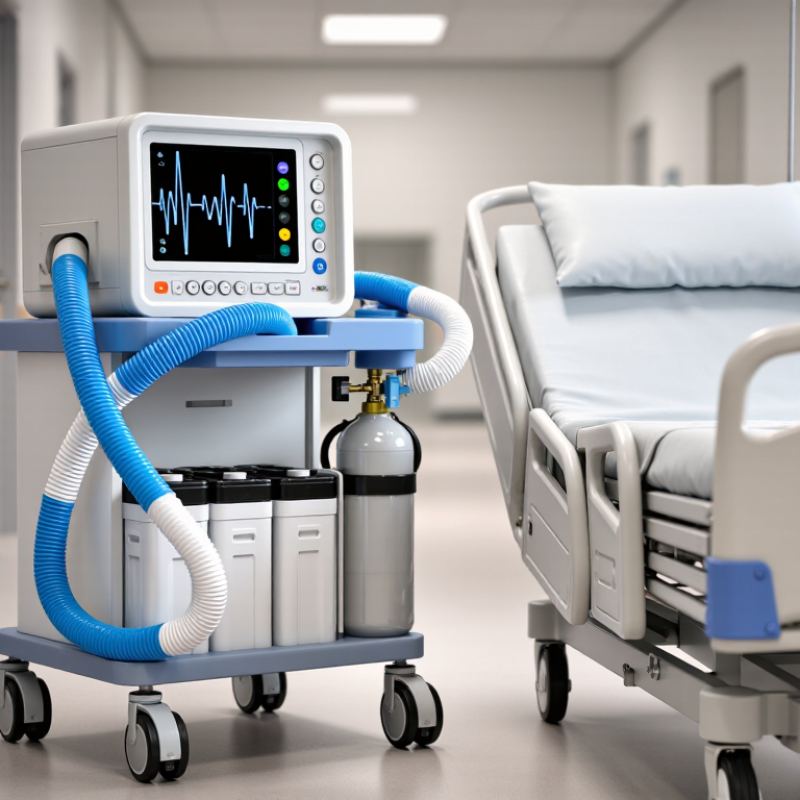
Define Your Portable Ventilator Needs and Intended Use
How to Choose the Best Portable Ventilator?
Define Your Portable Ventilator Needs and Intended Use
Start with the patient, not the device. A portable ventilator for home support differs from one used during ambulance transport or emergency transfer. Record the expected patient age, ventilation mode, oxygen source, breath frequency, and care environment. WHO’s 2020 Technical Specifications for Invasive and Non-invasive Ventilators identify tidal volume, respiratory rate, oxygen concentration, and airway pressure as essential monitoring parameters. These details should guide your comparison.
Check the real operating conditions. A transport unit may face vibration, heat, dust, and limited power. Review battery duration under actual settings, not only laboratory claims. The U.S. FDA’s ventilator guidance emphasizes alarm performance, pressure monitoring, backup power, and patient safety controls. Confirm whether the unit supports invasive ventilation, non-invasive ventilation, or both. Also check circuit compatibility and cleaning procedures.
Think about the person using it. A compact screen is not automatically easy to read at night. Can a caregiver recognize a high-pressure alarm quickly? Can clinical staff adjust settings without searching through complex menus? ISO 80601-2-12 covers critical-care ventilator safety requirements, but compliance does not replace clinical judgment. I once focused too heavily on battery life and overlooked alarm clarity. That was a poor assumption. Portable ventilation demands trade-offs, and no single specification reveals the whole experience.
How to Choose the Best Portable Ventilator? - Define Your Portable Ventilator Needs and Intended Use
| Intended Use | Suitable Ventilation Type | Patient and Care Setting | Key Functions to Verify | Power and Battery Considerations | Portability Priorities |
|---|---|---|---|---|---|
| Emergency Transport | Invasive and non-invasive ventilation | Pre-hospital care, ambulance transfer, or inter-facility transport | Volume-controlled and pressure-controlled modes, adjustable oxygen concentration, alarms, apnea backup, and monitoring of airway pressure and respiratory rate | Internal rechargeable battery, external DC input, clear battery status, and documented operating time under the intended settings | Low weight, integrated handle, shock resistance, rapid setup, and visibility in low-light conditions |
| Hospital Transport | Invasive ventilation with advanced monitoring | Critically ill adults or children moved between departments | Pressure support, synchronized ventilation, adjustable trigger sensitivity, oxygen monitoring, leak compensation, and comprehensive alarm management | Continuous mains operation with battery backup; confirm charging time and battery replacement requirements | Secure mounting, compact footprint, durable wheels or mounting options, and easy connection to hospital gas supplies |
| Home Invasive Ventilation | Long-term invasive ventilation through a tracheostomy | Medically stable patients receiving care at home | Reliable alarms, backup rate, adjustable pressure and volume settings, humidification compatibility, and data recording for clinical review | Battery backup sized for planned power interruptions; consider a backup power source and a second ventilator when clinically required | Quiet operation, simple controls, manageable dimensions, carrying accessories, and easy cleaning of reusable components |
| Home Non-Invasive Ventilation | CPAP, bilevel ventilation, or non-invasive pressure support | Patients with sleep-related breathing disorders or chronic respiratory insufficiency | Adjustable inspiratory and expiratory pressures, ramp function, leak compensation, humidifier compatibility, and usage data | AC operation is common; verify battery or DC compatibility if travel or backup power is needed | Low noise, small size, low power consumption, travel case, and easy mask and tubing replacement |
| Travel and Outdoor Mobility | A clinically prescribed portable invasive or non-invasive configuration | Users traveling by vehicle, aircraft, or moving between temporary locations | Stable performance during movement, altitude suitability, secure battery compartment, audible and visual alarms, and data continuity | Check battery duration, charging options, airline documentation, vehicle adapters, and compatibility with approved power supplies | Total carrying weight, protective case, rugged construction, quick-access controls, and availability of spare power and consumables |
| Pediatric or Specialized Care | A ventilator specifically cleared for the required patient size and clinical application | Children or patients requiring precise low-volume or specialized respiratory support | Appropriate minimum tidal volume, sensitive triggering, leak compensation, pediatric circuits, precise alarms, and validated monitoring accuracy | Battery performance should be confirmed at the selected pediatric settings; verify backup power and alarm response | Compact design, secure circuit connections, clear display, tamper-resistant settings, and support from trained clinical personnel |
Related Posts
-

Exploring the Benefits of Portable Ventilators: Your Guide to Respiratory Relief Anytime, Anywhere
-

Top Portable Ventilator Options for Every Need and Budget?
-
2026 Best Portable Ventilators for Global Buyers?
-

How to Choose the Best Mining Led Headlamp for Your Needs?
-

2026 How to Choose the Best Pneumatic Jumbolter for Your Needs?
-
What Are China Top LED Mining Headlamp Manufacturers?